This bill establishes the Professional Student Degree Act to define "professional degree" for student loan purposes, including specific advanced degrees required for professional practice.
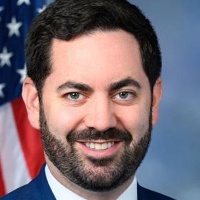
Michael Lawler
Representative
NY-17
The Professional Student Degree Act seeks to amend the Higher Education Act by formally defining what constitutes a "professional degree" for student loan purposes. This definition specifies degrees that prepare students to immediately begin practicing in a profession and require a skill level beyond a standard bachelor's degree. The bill explicitly lists numerous professional degrees, such as Law, Medicine, and specialized health fields, under this new classification.
New Act Defines 'Professional Degree' for Student Loans, Including Business and Education Programs
The newly introduced Professional Student Degree Act is short, but it packs a punch for anyone considering graduate school or currently saddled with student debt. This legislation’s main goal is to formally define what a “professional degree” is under the Higher Education Act, which matters because that definition often dictates eligibility for specific federal student loan programs and repayment options.
The Fine Print: What Counts as 'Professional'
Section 2 of the bill lays out a two-part test for a professional degree: first, it must signify completion of academic requirements to start practicing a profession, and second, it must represent a level of skill beyond a bachelor’s degree. The Secretary of Education gets the final say on that second part. This is the first big takeaway: the Secretary has significant power to interpret what exactly constitutes a higher skill level.
Crucially, the bill doesn't stop there. It includes a long, specific list of degrees that automatically qualify. You’ve got the usual suspects like Medicine (M.D.), Law, and Dentistry. But the list also includes degrees that aren't always seen as traditional professional degrees, such as Business Administration and Management, General, Education, and Social Work. For someone who pursued an MBA or a Master’s in Education, this could potentially open doors to loan benefits previously restricted to degrees like Pharm.D. or D.V.M.
Why This Matters for Your Wallet
Defining these degrees isn't just an academic exercise—it’s about who qualifies for what. If you’re a teacher or a social worker with a master’s degree, your degree being officially classified as “professional” could change your eligibility for certain loan caps, repayment plans, or even public service loan forgiveness programs down the line. It brings clarity to programs that often have confusing eligibility requirements.
On the flip side, this grants the Secretary of Education the authority to add any other degree to the list if it meets the two-part definition. This is where the vagueness comes in. While the intent might be to keep the law flexible for emerging professions, it means the federal government could expand the list of programs eligible for specific federal loan treatments without further Congressional input. For taxpayers, this raises questions about potential increased federal loan spending if broad, non-specialized graduate programs start receiving benefits intended for high-cost, high-barrier professional degrees.
In short, this act is an administrative change that could have real-world financial consequences. It clarifies the status of many graduate degrees but also hands over significant interpretive power to the Department of Education, which could either be used to expand access to loan relief or to significantly increase the scope of federal student loan programs.