This bill establishes a U.S. policy to align foreign investment review mechanisms with Canada and Mexico under the USMCA to enhance North American national security.
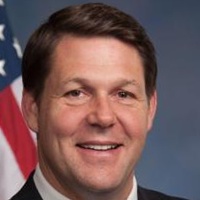
Jodey Arrington
Representative
TX-19
The CFIUSMCA Act establishes a policy for the U.S. to align its foreign investment review standards with Canada and Mexico under the USMCA. It directs the U.S. Trade Representative to advocate for the three nations to adopt similar national security screening frameworks for foreign investment. Furthermore, the bill seeks to create a coordination mechanism to address shared threats from investments in critical infrastructure and strategically important sectors across North America.
New Act Pushes USMCA Partners to Adopt CFIUS-Style Investment Screening for Critical Tech and Infrastructure
The new Consistency in Foreign Investment in the United States-Mexico-Canada Agreement Act (CFIUSMCA Act) isn't changing your taxes or your commute, but it’s a big deal for anyone who cares about North American supply chains and who owns the companies that build our critical tech. Essentially, this bill directs the U.S. government to use the upcoming USMCA trade agreement review as a lever to get Canada and Mexico to adopt foreign investment screening systems similar to the U.S.’s own powerful Committee on Foreign Investment in the United States (CFIUS).
The North American Security Huddle
The core of the bill is setting a negotiation objective for the U.S. Trade Representative (USTR). During the next joint review of the USMCA, the USTR has to push for two major things: first, that Canada and Mexico create or modify their laws to review foreign investments for national security risks, mirroring the framework in Section 721 of the Defense Production Act (the law that governs CFIUS). Second, the bill requires the establishment of a formal coordination mechanism, led by the USTR, the Secretary of State, and the Treasury Secretary, to address shared security threats across the continent. This isn't just a handshake agreement; the mechanism must facilitate information exchange, consistent screening standards, and a way to notify and resolve investments in one country that pose a security risk to the others (SEC. 2).
What’s on the Security Watchlist?
This push for coordinated screening focuses on two key areas: Critical Infrastructure and Strategically Important Economic Sectors. Critical Infrastructure is defined broadly, encompassing systems vital to national security, like energy grids or major transportation hubs. The list of "Strategically Important Economic Sectors" is extensive and reads like a who’s who of future tech: artificial intelligence, advanced computing, biotech, semiconductors, space technologies, and advanced manufacturing (SEC. 2. Key Definitions). If you work in any of these fields—whether you’re coding AI or manufacturing advanced materials—this means that any foreign investment coming into your company, or your competitor’s company, in North America will likely face a much stricter security check.
The Real-World Impact: Stricter Gates for Foreign Cash
For businesses, this bill signals a future where foreign investment across the USMCA zone becomes more complex, especially if you are in a strategic sector. Say a Mexican firm specializing in advanced manufacturing (a strategically important sector) receives a major investment from a non-USMCA country that raises security flags in Washington. Under this new coordination mechanism, the U.S. could flag that investment, potentially forcing Mexico to review or even block it, even if the investment only affects Mexican soil. While this aims to strengthen continental security and protect sensitive North American supply chains—which is good for long-term stability—it also means that foreign investors looking to buy into North American tech or infrastructure will face a higher, more consistent regulatory hurdle. The bill also mandates that the U.S. provide technical assistance to Canada and Mexico to help them build these new review systems (SEC. 2. Technical Assistance), suggesting that the U.S. is serious about ensuring its neighbors have the capacity to screen investments effectively.