This bill establishes federal requirements for public and private colleges receiving federal aid to protect student free speech and association rights, including prohibiting restrictive speech codes and providing enforcement mechanisms.
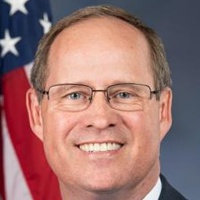
Gregory Murphy
Representative
NC-3
The Campus Free Speech Restoration Act aims to strengthen First Amendment rights for students at colleges and universities receiving federal funding. It prohibits public institutions from imposing overly restrictive speech codes, "free speech zones," or biased reporting systems that limit lawful expressive activity in generally accessible outdoor areas. The bill establishes enforcement mechanisms, including private lawsuits and federal review processes that could lead to the loss of federal funding for non-compliant public and private institutions.
Campus Free Speech Bill Forces Colleges to Scrap Speech Zones, Threatens Federal Aid Over Student Lawsuits
The newly proposed Campus Free Speech Restoration Act aims to overhaul how public and private colleges handle student expression, effectively ending restrictive campus speech policies nationwide. For any public or private university that takes federal student aid—which is almost all of them—this bill creates new, strict rules about student speech and, crucially, establishes both a federal lawsuit pipeline and a mechanism for the government to strip schools of funding if they don't comply.
The End of the 'Free Speech Zone'
If you've heard of colleges restricting protests or political activity to a tiny, designated "free speech zone," this bill is aimed squarely at ending that practice. For public universities, the bill mandates that you cannot be banned from engaging in lawful, noncommercial expressive activity in any generally accessible outdoor area of campus (SEC. 3). This means students can organize, protest, hand out flyers, and talk politics in the quad or outside the student union without needing a permit two weeks in advance.
Any time, place, or manner restrictions the university does impose must meet an extremely high legal bar: they have to be necessary for a compelling governmental interest and be the least restrictive means to achieve that interest. That's a huge shift. It basically means the school can’t restrict speech just because it’s convenient; they have to prove it’s absolutely essential, like for public safety or preventing actual disruption of classes.
New Liability: The $500 Penalty
This bill doesn't just change the rules; it gives students a serious legal hammer. If a public university violates a student's expressive rights, that student (or the Attorney General) can sue in federal court. If the student wins, the court is mandated to award them at least $500 for the initial violation, plus $50 for every day the violation continues after the school is notified (SEC. 3). They can also get compensatory damages and have their legal fees covered.
Think about that: a university administrator who tries to shut down a peaceful protest could instantly trigger a $500 fine, plus $50 every day they don't reverse course. This puts a real financial risk on administrators who might otherwise be tempted to enforce restrictive policies. It’s designed to make schools think twice before infringing on speech, but it also creates a new pathway for litigation that could be costly for institutions—and ultimately, taxpayers and tuition payers.
The Nuclear Option: Losing Federal Aid
Perhaps the most significant provision is the federal oversight process. The bill tasks the Secretary of Education with designating an employee to receive complaints about speech policies at both public and private universities. For public universities, if the Secretary determines a policy infringes on First Amendment rights, the school enters a multi-stage review process with strict deadlines.
If the school fails to fix the policy within the required time, the Secretary can declare it ineligible for all federal funds (SEC. 3). This is the nuclear option. While currently enrolled students and those accepted for the next year keep their aid for three years, the school itself loses access to billions in federal grants and research money. Eligibility can’t be restored for at least three years. This gives the Department of Education immense power over campus policy, turning speech compliance into a high-stakes funding issue.
What About Private Schools?
The rules are different for private universities that receive federal aid (except for religious institutions, which are exempt). They aren't held to the same First Amendment standard, but they are required to be completely transparent about their own speech policies. They must post all policies about student expressive rights on their website, easily accessible within two clicks of the homepage (SEC. 3).
If a private school violates its own published policy, a student can sue for damages, again with a minimum award of $500 plus $50 daily penalties. Furthermore, if the Secretary of Education finds a private school failed to properly disclose its policies, that school also faces the loss of all federal funding—again, a three-year minimum ban. This section is less about forcing free speech and more about ensuring schools stick to the rules they set for themselves, providing transparency for students before they enroll.