This act authorizes over \$4.5 billion in federal funding for 22 specific water infrastructure and groundwater management projects across California's Central Valley.
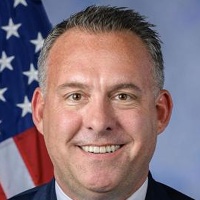
Adam Gray
Representative
CA-13
The Central Valley Water Solution Act establishes a program to provide over \$4.5 billion in financial and technical assistance for 22 specific water infrastructure projects within California's Central Valley Project. This funding targets critical needs such as groundwater storage, water quality treatment, and major canal capacity corrections. The Secretary of the Interior is tasked with implementing these projects in coordination with California and affected Indian Tribes. Importantly, the authorized funds are non-reimbursable, except for certain planning studies.
Central Valley Water Act Authorizes $4.5 Billion for Canal Repair and Groundwater Banking Projects
The Central Valley Water Solution Act is essentially a massive infrastructure funding package aimed squarely at fixing California’s aging and stressed water system. This bill authorizes Congress to appropriate over $4.5 billion to the Secretary of the Interior for 22 specific projects across the Central Valley Project (CVP). Think of it as a dedicated, four-and-a-half-billion-dollar emergency fund to keep the water flowing in one of the most productive agricultural regions in the world.
The Canal Repair Crew
If you’ve ever hit a massive pothole that wrecked your commute, you understand the frustration of crumbling infrastructure. Now imagine that pothole is a 100-mile-long canal that’s sinking into the ground. That’s the core problem this bill tackles. Over $2.4 billion is dedicated to fixing major conveyance systems that have lost capacity due to subsidence—the ground literally compacting because too much groundwater has been pumped out. Specifically, the bill allocates $830 million for the Delta-Mendota Canal (DMC) and $850 million for the San Luis Canal/California Aqueduct to restore their original capacity. This is critical because these canals move water from the north to the south; when they can’t carry their full load, water delivery becomes unreliable for cities and farms alike. The bill also throws $730 million at the Friant-Kern Canal for its Phase II capacity correction.
The Groundwater Savings Account
Beyond fixing the pipes, a huge chunk of this funding focuses on smarter water management below ground. The bill authorizes hundreds of millions for groundwater banking and recharge projects, which is basically saving water for a rainy (or non-rainy) day. For instance, the East San Joaquin Valley Groundwater Banking and Storage Program is authorized to receive $360 million to build facilities that allow excess surface water to soak into the aquifer instead of running out to sea. For a farmer, this means a more reliable water supply during inevitable drought cycles, stabilizing their operations. For homeowners, it means potentially slowing the rate at which local wells run dry.
Who Pays and Who Benefits?
One of the most notable provisions under the “Implementation Requirements” section is the Cost Sharing rule. For almost all these projects, the funding provided by this Act is explicitly not reimbursable and not subject to matching or cost-sharing requirements from the local water districts. Typically, when the federal government funds large water projects, local beneficiaries have to pay back a portion or match the funds. By waiving this requirement, the bill ensures these projects can move forward quickly, but it also means the $4.5 billion price tag falls entirely on the federal taxpayer.
This is a massive financial benefit for the specific water districts listed—like Westland Water District, which gets $85 million for recharge basins—as they receive vital infrastructure upgrades without the accompanying local debt. The bill also funds projects to improve drinking water quality, such as $30 million for Westlands Water District to build reverse osmosis plants to treat poor-quality groundwater. While the bill mandates that the Secretary of the Interior must comply with all environmental laws, including NEPA, the sheer scale of the funding and the focus on maximizing water delivery capacity will be closely watched by environmental groups concerned about increased water diversions from rivers and ecosystems.