This bill establishes a mandatory national ranked choice voting system for all federal elections for U.S. Senators and Representatives, while providing federal funding for implementation and prohibiting subsequent runoff elections.
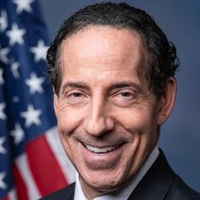
Jamie Raskin
Representative
MD-8
This bill establishes a national requirement for all U.S. Senate and House elections to use a ranked choice voting system, replacing traditional runoff elections. It mandates specific ballot designs, sets out a multi-round vote tabulation process, and prohibits separate runoff elections for federal offices. The legislation also provides federal funding to states to help implement these changes, which take effect for elections held on or after January 1, 2030.
Federal Elections to Adopt Ranked Choice Voting Nationwide by 2030: Feds Chip in for State Upgrades
Alright, let's talk about how we pick our federal leaders, because a big change is coming down the pike. The "Ranked Choice Voting Act" is looking to shake things up for how we elect U.S. Senators and Representatives across the entire country. If this bill passes, by January 1, 2030, every single federal election—primaries, special elections, and general elections—will be run using ranked choice voting (RCV). That means no more just picking one person; you'll get to rank candidates in order of your preference. The feds are even putting some money on the table to help states make this big switch, recognizing it’s not a small lift.
Your Ballot, Your Choices
So, what does this mean for your voting experience? Instead of picking just one candidate, you'll be able to rank them. Think of it like ranking your favorite pizza toppings: you pick your top choice, then your second, third, and so on. The bill says you'll need to be able to rank at least five candidates, or however many are running if it's less than five. This applies to everyone, from the office worker in a city to the trade worker in a rural area. The goal here is to give voters more voice, allowing them to support their favorite candidate without feeling like they're "wasting" their vote on someone who might not win. This also means no more separate runoff elections, which can often have lower voter turnout and add extra costs and time to the election cycle.
How Your Vote Gets Counted (The Nitty-Gritty)
This is where it gets a little more technical, but stick with me. When the votes are tallied, it happens in rounds. In the first round, everyone's top choice gets counted. If no one gets over 50% right away, the candidate with the fewest votes gets eliminated. Then, the ballots that ranked the eliminated candidate as their first choice get redistributed to their second choice. This process keeps going, round by round, until one candidate has a clear majority. It’s designed to ensure the winner has broad support, not just a plurality. For example, if you ranked Candidate A first, Candidate B second, and Candidate C third, and Candidate A gets eliminated, your vote automatically goes to Candidate B. This system is laid out in detail in Section 2, subsections 331 and 332, ensuring a consistent process nationwide.
Who's Paying for This Upgrade?
Changing an entire election system isn't cheap, and the bill recognizes that. The U.S. Election Assistance Commission is tasked with sending payments to each state by June 1, 2026. The amount will be based on how many registered voters each state has, with a per capita amount between $4 and $8. These funds are specifically for things like updating voting machines, redesigning ballots, training election officials and poll workers, and, importantly, educating voters like you on how this new system works. This federal funding, detailed in Section 2, subsection 334, aims to ease the financial burden on states and ensure a smooth transition.
What About State and Local Elections?
Good news if you're worried about local control: this bill explicitly states that it only applies to federal elections for U.S. Senators and Representatives. Section 3 makes it clear that your state and local elections will continue to operate under whatever rules your state has in place. So, if your town has a specific way of electing its mayor or city council, this federal bill won't change that. It's a targeted reform for federal offices, not a sweeping overhaul of all elections.
The Bottom Line
This bill is a pretty big step towards standardizing how we elect our federal representatives, aiming for winners with broader public support and potentially more civil campaigns. It’s got a long lead time, not kicking in until 2030, which gives states plenty of time to get their ducks in a row with federal assistance. While any big change has its challenges, the clear guidelines and federal funding in this Act suggest a thoughtful approach to modernizing our voting system. It’s about making your vote count more effectively, ensuring the person who wins truly represents a majority of voters' preferences.