This Act permanently affirms federal responsibility for the operation, maintenance, and funding of the Lower Yellowstone Fish Bypass Channel, explicitly prohibiting the transfer of these costs to local irrigation entities.
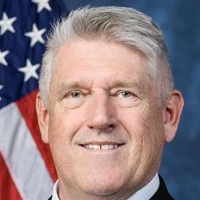
Troy Downing
Representative
MT-2
This Act formally establishes federal responsibility for the operation, maintenance, and funding of the Lower Yellowstone Fish Bypass Channel, which was built to protect the pallid sturgeon. It explicitly prohibits transferring any financial or operational burdens of the channel to the local, non-federal Lower Yellowstone Irrigation District or Project. The legislation ensures continuous federal funding and preserves the existing functions of the irrigation project.
New Act Locks In $1 Million Annual Federal Funding for Endangered Sturgeon Bypass, Shields Farmers From Maintenance Costs
The newly introduced Lower Yellowstone River Native Fish Conservation Act is a highly targeted piece of legislation designed to settle a specific, long-running dispute over who pays for a massive federal environmental project. Simply put, this bill permanently locks in the federal government—specifically the Department of the Interior—as the sole owner, operator, and funder of the $50 million Lower Yellowstone Fish Bypass Channel, a critical structure built to help the endangered pallid sturgeon migrate around a federal dam near Intake, Montana.
This Act isn't about creating new programs; it’s about drawing clear, legal lines in the sand. It explicitly authorizes $1,000,000 annually, starting in fiscal year 2026, for the Secretary of the Interior to keep that 2.1-mile engineered channel running smoothly (Sec. 8). Crucially, the bill uses the force of law to prohibit any federal agency from ever trying to shift the financial or operational burden of this bypass channel onto the local Lower Yellowstone Irrigation District (LYID) or Project (Sec. 4, Sec. 6).
The Fine Print: Who Pays for the Fish Ladder?
The core of this bill is financial certainty for local farmers and water users. The bypass channel was built because the nearby Intake Diversion Dam, which is federally owned and operated, was blocking fish migration. Because the dam created the problem, the federal government paid to build the bypass as a mitigation measure under the Endangered Species Act (ESA) (Sec. 2). However, without clear legislation, the local irrigation district—which is a state-chartered entity responsible for delivering water to farms—could have been vulnerable to future administrative attempts to force them to pay for the maintenance of this federal environmental project.
This bill slams the door on that possibility. It declares that the bypass channel is separate from the irrigation project and that the LYID has zero ownership, operational, or financial responsibility for it (Sec. 4). For the local farmers, this is a massive win for stability: they can focus on delivering water for agriculture without the looming threat of being billed for a multi-million-dollar federal fish conservation project.
The 'Never Again' Clause
The legislation goes further than just preventing future cost shifts; it addresses past attempts. Section 6 states that any prior administrative action, agreement, or cost-sharing arrangement that tried to impose financial or operational responsibility for the channel on the Irrigation District is now null and void. This essentially cleans the slate and ensures that federal agencies can’t use old paperwork to try and stick the local group with the bill.
Perhaps the most interesting provision is the enforcement mechanism in Section 7. If the Secretary of the Interior tries to transfer operational or financial responsibility to the local district, the LYID, or any affected stakeholder, has the right to sue the federal government in the U.S. District Court for the District of Montana. This gives the local entity a direct legal tool to enforce the terms of the Act, ensuring the federal government stays on the hook for its own environmental compliance.
In short, this Act is a legal shield for the local irrigation district and a guarantee for the pallid sturgeon. It confirms that when the federal government mandates an expensive environmental fix like this bypass channel, it must also provide the long-term funding and maintenance, protecting local water users from having to foot the bill for a problem they didn't create.