This bill establishes new requirements, time limits, and Congressional approval for Department of Defense support to civilian law enforcement, prohibits dual service in the DoD and civilian law enforcement, and creates a private right of action for violations.
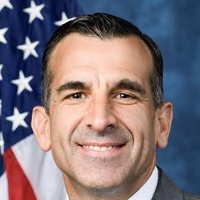
Sam Liccardo
Representative
CA-16
The Military in Law Enforcement Accountability Act establishes new requirements and strict time limits for the Department of Defense when providing support to civilian law enforcement agencies, requiring prior Congressional notification and justification. It also prohibits Department of Defense personnel from simultaneously serving in civilian law enforcement roles, with limited exceptions for reservists. Furthermore, the bill broadens the circumstances under which military and federal law enforcement can assist civil authorities and creates a private right of action for violations of the Act.
New Bill Puts 30-Day Limit on Military Support for Police, Requires Congressional Supermajority for Extensions
This bill, officially titled the Military in Law Enforcement Accountability Act, aims to significantly tighten the reins on how the Department of Defense (DoD) interacts with and supports civilian police forces. Essentially, it puts up new hurdles to limit what many call the ‘militarization’ of local law enforcement by making it much harder for military resources—like equipment, training, or personnel—to be loaned out for extended periods.
The 30-Day Clock and the Congressional Supermajority
The biggest change is a new time limit on military support. Currently, the DoD can provide support to civilian agencies under several existing sections of law (Title 10, sections 272, 273, or 274). This bill says that support can only last for 30 days unless Congress explicitly signs off on an extension. Before the DoD even gets started, the President has to send Congress a detailed justification package, including the agency receiving the support, the project’s budget and timeline, and how the project will be sustained long-term. Think of it as a mandatory, detailed project proposal that everyone has to see.
If the support is needed for longer than a month—say, specialized intelligence gathering for a complex, ongoing investigation or long-term training—it hits a major legislative roadblock. Extending that support requires a specific “joint resolution of approval” from Congress. Here’s the kicker: in the Senate, passing this resolution requires an affirmative vote of three-fifths of the Senators. That’s a supermajority, meaning 60 votes are needed. This makes it politically very difficult to extend assistance, even if local police forces desperately need it. For local police chiefs and sheriffs, this means relying on specialized DoD help just became a much more uncertain proposition, potentially causing delays or cancellations for critical operations that run longer than a month.
Separating the Soldier from the Cop
Section 3 of the bill tackles the issue of dual employment. With a few key exceptions, it prohibits anyone serving in the Department of Defense—military or civilian employee—from simultaneously holding any position with a civilian law enforcement agency outside the DoD. This is designed to create a clear separation between military and police roles, avoiding conflicts of interest and confusion about authority.
However, there’s a necessary carve-out for the Reserve components (like the Army Reserve or National Guard). If you’re a reservist whose regular, civilian job is working as a police officer, you’re exempt from this ban. But if you get called up to active duty, the rules change: you must formally and officially recuse yourself from all civilian law enforcement duties for the entire time you are on active military orders. This means a police officer who is also a reservist can’t be both on active military duty and performing police work at the same time, ensuring there is no confusion about which authority they are operating under.
Broader Scope, Higher Stakes
Another subtle but important change is found in Section 4. It deals with when the Armed Forces and federal law enforcement personnel must be used to assist civil authorities. The bill removes the specific phrase “to respond to a civil disturbance” from the law. This action broadens the requirement to apply to all instances of supporting Federal authorities, not just during civil disturbances. While this might sound minor, it expands the types of domestic situations where military assistance could be requested, potentially increasing the military’s involvement in domestic affairs under these new, stricter oversight rules.
Finally, the bill includes a private right of action (Section 5). This is huge for accountability. It means that any person, state, or local government harmed by a violation of these new rules can file a civil lawsuit against the federal government or a federal officer. If you believe the DoD violated the 30-day limit without Congressional approval, or if military resources were misused, you could sue for damages or injunctive relief (a court order to stop the action). This provision significantly empowers citizens and local governments to enforce these new transparency and oversight requirements, making sure the new rules aren’t just ignored.