This bill mandates the Federal Energy Regulatory Commission to hold a technical conference and report on strategies to shield residential and small commercial utility customers from rising energy costs driven by large AI data centers.
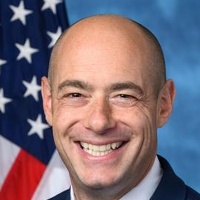
Greg Landsman
Representative
OH-1
This bill, the Protecting Families from AI Data Center Energy Costs Act, directs the Federal Energy Regulatory Commission (FERC) to convene a technical conference on strategies to shield residential and small commercial utility customers from rising energy costs driven by large loads like AI data centers. Following the conference, FERC must submit a report to Congress detailing recommendations and best practices. The goal is to ensure utility costs remain manageable for everyday families and small businesses.
Proposed Bill Mandates Federal Study on Shielding Families from AI Data Center Energy Costs
This legislation, titled the Protecting Families from AI Data Center Energy Costs Act, is essentially a call for a federal-level meeting and a subsequent report. It doesn't change any energy rates today, but it sets the stage for future regulatory action by forcing the Federal Energy Regulatory Commission (FERC) to figure out how to shield residential and small commercial customers from rising energy costs caused by massive power users, often dubbed “large loads.” Think of those giant, power-hungry AI data centers and crypto mining operations that are popping up everywhere.
The Federal Mandate: A High-Stakes Meeting
Within 90 days of this bill becoming law, FERC must convene a technical conference. This isn't just a casual chat; it’s a required, Commissioner-led meeting bringing together a who’s who of the energy world: public utilities, transmission providers, state regulators, ratepayer advocates, and, crucially, representatives from those “large loads” themselves. The entire point of this gathering is to discuss strategies and rate structures aimed at protecting your average homeowner or local coffee shop from getting stuck with the bill when a new data center sucks up power equivalent to a small city (SEC. 2. Technical Conference Requirement).
Who Pays the Power Bill?
This bill acknowledges a real-world problem: when a massive new energy user connects to the grid, it often forces utilities to upgrade infrastructure, build new transmission lines, or even fire up more expensive power generation sources. Those costs typically get passed on to all ratepayers. The core question this conference must answer is how to prevent that cost from landing disproportionately on residential and small business customers. For instance, should a data center pay a higher, dedicated rate that covers its infrastructure impact, or should the costs be socialized across the entire customer base? This is the debate FERC is being forced to mediate.
The Report: Setting the Table for Future Rules
The immediate output of this bill is not a new rate structure, but a detailed report. Within 180 days after the conference wraps up, FERC must submit its findings, recommendations, and best practices to Congress (SEC. 2. Report to Congress). This is where the rubber meets the road. While the bill doesn't mandate that Congress or FERC adopt these recommendations, this report will serve as the official blueprint for any future regulatory moves to address energy cost allocation. For the utilities and large energy consumers, this report will define the battle lines for upcoming regulatory fights over who pays for grid modernization and expansion. For you, the residential customer, the hope is that this process results in a framework that keeps your monthly bill from spiking just because a new AI farm moved into the neighborhood.