This bill authorizes the Attorney General to appoint qualified, temporary immigration judges for limited terms to assist with case backlogs while emphasizing the need for permanent appointments and rigorous training.
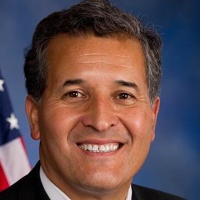
Juan Vargas
Representative
CA-52
This bill establishes the **Temporary Immigration Judge Integrity Act** to authorize the Attorney General to appoint highly qualified, temporary immigration judges for limited terms. These temporary judges are intended to supplement, not replace, permanent judges and must meet specific experience requirements. The legislation mandates rigorous oversight, training protocols, and limits the total service time for these temporary appointments to ensure judicial integrity.
New Act Authorizes Two-Year Stints for Temporary Immigration Judges to Clear Backlogs
The newly proposed “Temporary Immigration Judge Integrity Act” (SEC. 1) is a straightforward attempt to quickly boost the number of judges handling immigration cases. The bill authorizes the Attorney General (AG) to hire temporary immigration judges for renewable terms not exceeding six months, with a hard cap of two years of consecutive service (SEC. 3).
This isn't about hiring fresh faces; it's about bringing in experienced ringers. The eligible pool for these temporary roles is highly specific: former immigration judges, former appellate judges from the Board of Immigration Appeals (BIA), current or retired administrative law judges (ALJs) from the Executive Office for Immigration Review (EOIR), or ALJs from other federal agencies with at least a decade of immigration law experience. The AG can also tap Department of Justice attorneys with 10 years of immigration law experience. The idea is to immediately inject seasoned expertise into courts struggling with massive backlogs.
The All-Star Bench and the Training Question
These temporary judges aren't just filling seats; they have the exact same authority as permanent immigration judges to decide cases and manage court matters (SEC. 3). For someone waiting on a decision—a family trying to reunite or a company waiting for an employee’s status to be resolved—this could mean a much faster resolution, cutting down the multi-year wait times that currently plague the system.
However, the bill recognizes that even experienced judges need to be current on procedures. It mandates that the AG establish procedures ensuring these temporary judges receive a minimum of eight weeks of initial training and then ongoing training at least one day every two weeks. That’s a serious commitment to consistency. But here’s the catch: if a former immigration judge or BIA member starts their temporary gig within two years of leaving their prior post, they are exempt from the eight-week initial training. While this makes sense for recent retirees, it creates a potential loophole where judges who haven’t been subject to the latest procedural updates for almost two years could jump back in without the full refresher course. The AG’s oversight rules will be key here to ensure consistency.
The Two-Year Limit and the Integrity Guardrails
Crucially, the bill builds in guardrails to prevent the system from becoming reliant on these temporary positions. A temporary judge can only serve for a maximum of two consecutive years. Once they hit that limit, they face a three-year “cooling-off” period before they can be reappointed to the temporary role. This provision directly addresses the “Sense of Congress” stated in the bill (SEC. 2), which emphasizes that these temporary judges are not intended to replace permanent immigration judges. It’s a structural mechanism designed to force the system to continue hiring permanent staff.
For the system itself, this provides essential short-term flexibility. For the public, it means that while cases might move faster, the quality of justice hinges on the effectiveness of the AG’s mandated oversight and training procedures. If those procedures are weak, the influx of temporary staff—some of whom skip the initial training—could lead to inconsistent rulings. The big picture is that this bill provides a necessary surgical tool to address backlogs, but the AG needs to use it precisely, lest the temporary fix becomes a permanent crutch.