The SECURE STEM Act prohibits the issuance of certain visas and employment at national laboratories for nationals of specific countries, with provisions for national interest waivers and required reporting.
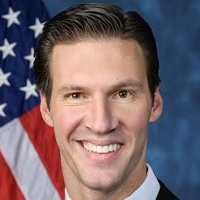
Pat Harrigan
Representative
NC-10
The SECURE STEM Act prohibits the issuance of certain visas and bars employment at national laboratories for nationals from specified countries, including China and Russia. Waivers to these bans may be granted if deemed in the U.S. national interest. The bill also mandates regular reporting to Congress detailing any waivers issued under this Act.
SECURE STEM Act Bans Visas for Nationals of 5 Countries in Key STEM Fields and Kicks Workers Out of National Labs
The new Securing Education and Critical US Research and Employment in STEM Act of 2025, or the SECURE STEM Act, is a major policy shift that targets specific foreign nationals seeking to work or study in the US. The bill prohibits the State Department from issuing visas—and the Department of Homeland Security from admitting—nationals from five countries: China, Russia, Iran, North Korea, and Cuba. This sweeping ban applies to several critical visa categories, including the H-1B (skilled workers), O-1 (extraordinary ability), F (academic students), J (exchange visitors), and M (vocational students) visas. Essentially, if you are a national of one of those countries and you plan to come to the US for advanced study or specialized work in STEM, this bill shuts the door, regardless of your qualifications or current law (Sec. 2).
The National Lab Lockout
Beyond blocking new entries, this bill immediately hits those already working in sensitive research environments. Starting on the day the law is enacted, any national research laboratory (defined as a Federal laboratory under the Stevenson-Wydler Act) is prohibited from employing a covered foreign national who is already in the US under one of those visa categories (Sec. 2). Think of a highly specialized researcher from China on an H-1B visa working on advanced materials at a Department of Energy lab; the day this bill becomes law, they are out of a job. This isn't a future phase-out; it's an immediate, retroactive employment ban based on nationality, which could cause instant chaos and disruption in ongoing, critical research projects across the country.
The Waiver That Might Not Be
There is a narrow escape clause: a "National Interest Waiver." The Secretary of State and the Secretary of Homeland Security can jointly waive the visa and employment bans for a specific individual if they both determine it is in the national interest (Sec. 2(c)). However, requiring both cabinet secretaries to agree on a waiver sets a very high bar. Practically speaking, this means the exception is likely to be used sparingly, if at all, even for world-class talent needed for specific projects. The bill also mandates heavy oversight: the State Department must send a report to Congress every six months detailing every single waiver granted, including the justification and biographical information—even prior connections to foreign government-sponsored institutions—for the person who received it (Sec. 3). This level of scrutiny makes the waiver process politically difficult and potentially exposes the individuals receiving them.
Who Feels the Squeeze?
This legislation has far-reaching implications, extending well beyond the national security focus. First and foremost, it slams the door on students and highly skilled workers from the five listed countries, regardless of whether they have any connection to sensitive government work. For example, a brilliant grad student from Iran seeking a Ph.D. in computer science on an F-1 visa is now blocked. Second, US national research laboratories and the universities that feed them will lose access to a significant portion of the global STEM talent pool, potentially slowing down innovation in fields from AI to quantum computing. While proponents might argue this protects US jobs and intellectual property, the cost is a massive contraction of the available talent, which could force US research institutions to look elsewhere or simply forgo complex projects that rely on specialized international expertise.