This bill requires public colleges and universities receiving federal funding to charge in-state tuition rates to eligible U.S. national residents of Guam, the Northern Mariana Islands, American Samoa, and the U.S. Virgin Islands.
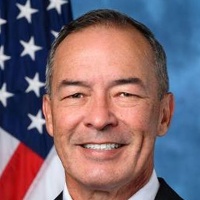
James (Jim) Moylan
Representative
GU
The Territorial Student Access to Higher Education Act requires public colleges and universities receiving federal funding to offer in-state tuition rates to eligible U.S. nationals residing in Guam, the Northern Mariana Islands, American Samoa, and the U.S. Virgin Islands. This legislation aims to increase educational affordability and accessibility for students from these U.S. territories.
| Party | Total Votes | Yes | No | Did Not Vote |
|---|---|---|---|---|
Republican | 218 | 143 | 71 | 4 |
Democrat | 214 | 208 | 1 | 5 |
Territorial Student Access Act Mandates In-State Tuition Rates for Residents of Guam, USVI, and Pacific Territories at Public Universities
The Territorial Student Access to Higher Education Act aims to bridge the massive cost gap for students living in U.S. territories who want to attend public universities on the mainland. By amending the Higher Education Act of 1965, the bill requires any public college or university that accepts federal financial aid to charge in-state tuition rates to residents of Guam, American Samoa, the U.S. Virgin Islands, and the Northern Mariana Islands. To qualify under Section 2, a student must be a resident of one of these territories and hold U.S. national status. This isn't just a suggestion; the bill ties this requirement directly to the 'program participation agreement' that schools must sign to receive federal student aid funds, effectively making it a condition of their federal funding.
Breaking the Tuition Barrier
For a student in American Samoa or Guam, the dream of attending a specialized program at a state school in California or Texas often comes with a price tag two to three times higher than what local residents pay. This bill levels that playing field by mandating that these students are treated as locals for billing purposes. For example, a student from the U.S. Virgin Islands looking to study engineering at a mainland public university would see their tuition bill drop from the 'out-of-state' rate—which often exceeds $30,000—to the 'in-state' rate, which averages closer to $10,000. By removing the financial penalty of living in a territory, the bill treats these U.S. nationals as equal stakeholders in the national higher education system.
The Compliance Catch
The mechanism for this change is found in the fine print of federal funding. Under Section 487(a) of the Higher Education Act, colleges have to follow specific rules to keep their access to Pell Grants and federal student loans. This bill adds the territorial tuition cap to that list of rules. While this is a major win for students and families in the territories who are currently juggling the high costs of island living with the desire for advanced degrees, it does put the squeeze on public university budgets. Since these institutions often rely on high out-of-state tuition to subsidize their operations, they will have to adjust for the loss of that premium revenue from territorial students. However, for the average family in Saipan or St. Croix, this represents a significant shift in the lifetime cost of a college degree.