This act establishes a state option to provide Medicaid coverage for one year to uninsured individuals with serious mental illness or substance use disorders who meet income requirements.
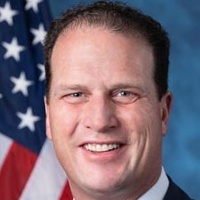
August Pfluger
Representative
TX-11
The Access to New Community Health Opportunities and Recovery Act of 2025 (ANCHOR Act) establishes an option for states to provide Medicaid coverage to uninsured individuals with serious mental illness or substance use disorders whose income is at or below 100% of the federal poverty line. This initial one-year coverage requires states to ensure enrollees receive a care plan and report on specific behavioral health quality measures. States may choose to extend coverage annually after redetermining eligibility.
ANCHOR Act Offers 1-Year Medicaid Coverage for Uninsured with Serious Mental Health or Substance Use Issues
The Access to New Community Health Opportunities and Recovery Act of 2025, or the ANCHOR Act, sets up a new option for states to extend Medicaid coverage specifically to uninsured adults dealing with serious mental illness (SMI), serious emotional disturbance, or substance use disorders (SUDs), including opioid and stimulant use. The core requirement is that the individual’s income must be at or below 100% of the federal poverty line (FPL).
A New Treatment Lifeline for the Uninsured
This section of the ANCHOR Act is designed to create a direct path to care for some of the most vulnerable people who are currently falling through the cracks. If a state opts into this program, eligible individuals—who can be identified by a range of entities including emergency departments, certified behavioral health clinics, or even law enforcement—get an initial continuous 1-year period of Medicaid coverage. This coverage must be the same quality and scope as standard Medicaid, meaning it covers more than just the initial crisis. For someone struggling with opioid addiction, this means having access to continuous medication-assisted treatment, counseling, and primary care for a full year without the sudden drop-off in services that often derails recovery.
The 100% FPL Catch and Care Plan Mandate
While this is a clear benefit for those who qualify, the income limit is important: only those at or below 100% FPL are eligible. For context, that’s roughly $15,060 annually for a single person in 2024. If you’re uninsured and making $16,000, this program won't help you, even if you desperately need treatment for a serious mental health condition. States that choose to implement this must also ensure every enrolled person gets a formal care plan developed within 60 days of enrollment by a qualified provider. This requirement (Section 2) is crucial because it ensures the coverage translates into actual coordinated care, rather than just a card in a wallet. It forces the system to move beyond just crisis intervention and toward long-term recovery planning.
State Buy-In and the Annual Review
This isn't a federal mandate; it’s a state option. Access to this coverage depends entirely on whether your state legislature decides to adopt the program. If they do, they must agree to report specific behavioral health quality measures for this population. This means states have to track how well the program is actually working, which is a big win for accountability. The coverage is also only guaranteed for one year at a time; states must redetermine eligibility—that is, check the income and the qualifying condition—before extending coverage for subsequent years. For the individual, this means stability for a year, but also the annual stress of re-qualification. For the state, it means ongoing administrative work to keep the enrollment accurate and focused on those who need it most.