This bill mandates reporting on Mexico's compliance with the 1944 water treaty and restricts U.S. engagement if Mexico fails to deliver its required water volume.
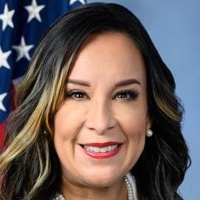
Mónica De La Cruz
Representative
TX-15
This Act mandates annual reporting on Mexico's compliance with its 1944 water delivery treaty obligations to the United States. If Mexico fails to deliver the required minimum amount of water, the President must deny Mexico's non-emergency requests for U.S. water deliveries. The bill allows for limited exceptions only for certified ecological or humanitarian emergencies vital to U.S. national interests.
Water War Diplomacy: New Bill Mandates Punishing Mexico if 1944 Water Treaty Obligations Aren't Met
The “Ensuring Predictable and Reliable Water Deliveries Act of 2025” is a piece of legislation that takes a hard line on international water rights. Specifically, it targets Mexico’s compliance with a 1944 treaty governing water sharing from the Rio Grande. In short, this bill sets up a mandatory mechanism where, if Mexico doesn’t deliver a minimum amount of water to the U.S. annually, the U.S. government must impose diplomatic and economic restrictions.
The Treaty Trigger: 350,000 Acre-Feet
This bill tasks the Secretary of State with submitting an annual report to Congress. This report has to answer two big questions: Did Mexico deliver at least 350,000 acre-feet of water to the U.S. in the previous year, and are they on track to deliver the full 1,750,000 acre-feet required by the end of the five-year treaty cycle? For context, an acre-foot is roughly the amount of water needed to cover one acre of land one foot deep—a huge volume that matters deeply to farmers and cities along the border. If the report finds Mexico missed that 350,000 acre-foot minimum, mandatory consequences kick in immediately.
Putting the Squeeze on Emergency Aid and Business
If the water target is missed, the President is required to deny all “non-Treaty requests” from Mexico for emergency water deliveries. Think of this as cutting off the special, non-standard channels Mexico might use to ask for help during a drought or crisis. The bill also gives the President the power to limit or end U.S. government engagement with specific Mexican economic sectors that benefit from water covered by the treaty. The Secretary’s report must identify these sectors—say, agriculture or manufacturing—and the President can then use that list to apply pressure. The only engagement that is explicitly protected from these restrictions is work aimed at stopping the flow of fentanyl, its precursors, and other synthetic drugs into the U.S., acknowledging that drug enforcement is a separate, critical issue.
When Crisis Hits: The Narrow Exception
What happens if a major disaster hits a Mexican border city, and they need emergency water? This is where the bill gets particularly tight. The President can only approve a “non-Treaty request” if the Secretary of State certifies every 120 days that the water is only for an ongoing ecological, environmental, or humanitarian emergency. Crucially, the bill explicitly states the water cannot be used for municipal or industrial purposes, normal water supply, infrastructure maintenance, or fixing water systems. This means if a city’s main water line breaks or a severe drought threatens basic city functions, the U.S. is mandated to deny the request if the treaty obligations haven't been met. This restriction essentially uses essential services as leverage, which could create significant humanitarian issues for our neighbors across the border.
The Takeaway for Bilateral Relations
This legislation essentially weaponizes diplomatic and economic engagement, tying it directly to water delivery compliance. While it aims to ensure U.S. water users get what they are due under the 1944 treaty, it does so by creating a high-stakes, potentially coercive framework. Instead of treating water disputes as a technical matter, this bill elevates non-compliance into a trigger for broad diplomatic restrictions. For anyone concerned about stable trade or border relations, linking these critical issues—water, diplomacy, and economic engagement—means that a drought in Mexico could quickly become a major foreign policy crisis for the U.S.