This bill establishes eligibility criteria for federal student aid for distance education programs offered by foreign institutions, limiting distance learning components and requiring in-person attendance in the host country.
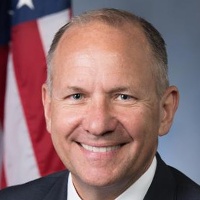
Lloyd Smucker
Representative
PA-11
This act establishes the rules for foreign colleges and universities offering distance education programs to be eligible for federal student aid. Eligibility is limited to programs where distance education makes up no more than 12.5% of the coursework. Furthermore, these programs must be overseen by an external entity and require students receiving federal aid to be physically present in the foreign institution's home country during instruction.
New Rule Caps Foreign University Distance Learning at 12.5% for Federal Student Aid Eligibility
The “Providing Distance Education for Foreign Institutions Act” sets strict new rules for foreign colleges and universities that want their U.S. students to use federal financial aid, like Pell Grants or federal loans. Essentially, if a foreign degree program relies too heavily on online learning, it’s out. The key takeaway is that no more than 12.5 percent of the degree program can be delivered principally through distance education. These changes kick in for the first academic semester starting at least three months after the bill becomes law.
The 12.5% Rule: Keeping Education Grounded
This bill directly amends the Higher Education Act, drawing a hard line on how much online learning is acceptable in foreign programs funded by U.S. federal aid. Think of it like this: if you’re a student using federal aid to study abroad, this bill ensures that 87.5% of your coursework must be delivered in person. For example, if your program is 40 courses long, only five of those courses could be primarily online. The bill clarifies that a course isn't considered “principally through distance education” if it requires regular in-person attendance for more than half of the instruction time, even if it uses online tools.
Where You Have to Be: The Physical Presence Clause
Here’s a provision that could create some headaches: the bill requires students receiving federal aid to be physically present in the country where the foreign institution is located during the distance education instruction. This means if you’re enrolled in a university in Germany and take one of your allowed online courses, you can’t fly home to the U.S. and take it remotely from your parents’ basement. You must remain in Germany. For students juggling visa requirements, travel costs, and complex schedules, this requirement adds a layer of logistical complexity, limiting the flexibility that online courses usually offer.
Quality Control Checkpoint
To ensure that even the limited online portion is high quality, the bill requires an outside oversight entity—like an accrediting agency or a government body—to evaluate the foreign institution and confirm it can effectively deliver distance education. This is a crucial safeguard, adding a layer of quality control to protect students and federal dollars. It means a foreign university can’t just throw a few low-effort online courses into the mix; they need to prove they have the infrastructure and capability to run them properly.
What This Means for Students and Schools
For students, this bill is a double-edged sword. On one hand, it helps ensure that federal aid is supporting traditional, immersive study abroad experiences, which is great for those who want to be fully present in the foreign country. On the other hand, it severely restricts flexibility. Any foreign school that wanted to use U.S. federal aid to fund a program that’s even moderately hybrid—say, 20% online—is now out of luck. This limits options for students who might need more distance learning flexibility due to internships, family obligations, or simply the modern reality of blended learning, forcing them toward programs that are almost entirely in-person.