The Healthy MOM Act establishes special enrollment periods for pregnancy across various health plans, mandates maternity coverage for dependents, and ensures continuous 12-month Medicaid and CHIP coverage for pregnant and postpartum individuals.
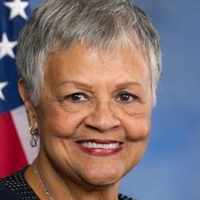
Bonnie Watson Coleman
Representative
NJ-12
The Healthy Maternity and Obstetric Medicine Act, or Healthy MOM Act, aims to improve maternal and newborn health outcomes by ensuring comprehensive maternity coverage is accessible. It establishes special enrollment periods for pregnant individuals across various health plans and mandates that dependent coverage must include maternity care. Furthermore, the bill secures continuous 12-month postpartum coverage under Medicaid and CHIP and adjusts federal employee health benefit rules regarding pregnancy.
Healthy MOM Act Mandates 12-Month Postpartum Coverage and Special Enrollment for Pregnant Individuals Starting 2027
The Healthy Maternity and Obstetric Medicine Act, or the Healthy MOM Act, is a major push to close gaps in healthcare coverage for pregnant individuals and new mothers. Simply put, this bill establishes mandatory special enrollment periods (SEPs) for pregnant people across almost all major insurance markets—including the ACA exchanges, employer-sponsored group health plans, and federal employee plans. Crucially, it also requires states to provide continuous Medicaid and CHIP coverage for a full 12 months postpartum, a significant upgrade from the current 60-day standard.
No More Waiting: Pregnancy as a Qualifying Life Event
One of the biggest headaches for someone who gets pregnant while uninsured or underinsured is having to wait for the next open enrollment period. This bill tackles that head-on (SEC. 3). For those relying on the ACA marketplace or employer coverage, the moment a pregnancy is reported to the insurer or confirmed by a provider, a special enrollment period kicks in. This means no more crossing your fingers hoping you make it to the next enrollment window before needing prenatal care. If you’re a contractor whose spouse’s plan doesn’t cover you, or a young adult on a catastrophic plan, this SEP means immediate access to the necessary comprehensive care. The changes to group health plans and ACA coverage are set to apply to plan years beginning on or after January 1, 2027.
For federal employees, the bill explicitly treats pregnancy as a “qualifying life event” (QLE) that triggers a change in family status, allowing immediate enrollment or plan changes (SEC. 5). This provision even includes a clause to protect the processing of these enrollments during government shutdowns, classifying them as emergency services under the Anti-Deficiency Act. That’s a real-world win for continuity of care.
Closing the Dependent Coverage Loophole
If you’re a parent with a dependent daughter, you might assume your family health plan covers everything. But many plans, particularly older ones, have excluded maternity care for dependents, forcing young women to navigate complex, expensive coverage gaps. The Healthy MOM Act mandates that any group or individual plan that covers dependents must now include maternity care—specifically covering pregnancy, childbirth, and postpartum care—for all enrolled dependents, regardless of their age (SEC. 4). This change, effective in 2027, is a huge step toward ensuring young adults don't face massive medical bills just because they are still on their parent's plan.
The 12-Month Postpartum Lifeline
For low-income families, the most critical change might be in Medicaid and CHIP. Currently, Medicaid coverage tied to pregnancy often ends 60 days after delivery. The bill makes continuous 12-month coverage for pregnant and postpartum individuals mandatory for all states (SEC. 7). This is massive because data shows over half of all maternal deaths occur after delivery, and extending coverage for a full year ensures access to critical follow-up care, mental health services, and management of chronic conditions that often arise postpartum. This shift from optional to mandatory coverage is intended to drastically improve health outcomes and equity, particularly for Black and American Indian/Alaska Native women who face disproportionately high maternal mortality rates.
One detail to watch in the Medicaid section (SEC. 6) is the adjustment to income eligibility standards. The bill removes the specific phrase "not more than 185 percent" of the federal poverty level in one section, while simultaneously setting a floor for minimum income eligibility based on what a state was using as of January 1, 2025. The goal is to lock in the most generous state policies as the minimum standard going forward, but the technical language around removing the 185% cap could create administrative complexity as states adjust their formulas.