This bill amends the Taos Pueblo Indian Water Rights Settlement Act to establish new trust funds, provide supplemental funding for mutual-benefit water projects, and define infrastructure related to mitigating surface water depletion.
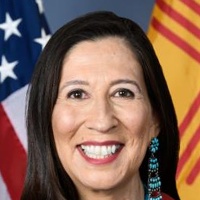
Teresa Leger Fernandez
Representative
NM-3
This bill amends the Taos Pueblo Indian Water Rights Settlement Act to establish new trust funds for groundwater and surface water sharing infrastructure. It also provides supplemental funding and strict deadlines for non-Pueblo entities involved in mutual-benefit water projects, including those related to the new Mitigation Well System. Finally, the Act appropriates significant mandatory funding for these new trust funds and project assistance, subject to inflation adjustments.
Water Settlement Bill Pumps $367 Million into Taos Pueblo Infrastructure, Sets Strict Deadlines for Local Projects
The Taos Pueblo Indian Water Rights Settlement Amendments Act of 2025 is essentially a major funding and accountability update to a complex 2010 water agreement. This legislation is all about getting critical water infrastructure built and paid for. It establishes three massive, mandatory funding streams totaling over $367 million from the U.S. Treasury, largely dedicated to the Taos Pueblo’s water future and local, collaborative projects.
The New Trust Funds: Future-Proofing Water
This bill creates two new, specific trust funds for the Taos Pueblo, collectively called the "Pueblo Trust Funds" along with an existing one. Think of these as dedicated savings accounts for long-term water security. First, there’s the Taos Pueblo Groundwater Development Supplemental Trust Fund, which gets an initial $190 million infusion. This money can only be used for building, operating, or repairing infrastructure related to groundwater production and delivery. Second, the Taos Pueblo Surface Water Sharing Supplemental Trust Fund receives $16 million to pay for infrastructure like surface water sharing systems and measurement gauges (SEC. 3).
Why does this matter? Because these funds are held in the U.S. Treasury and earn interest. This structure ensures that the Pueblo has a stable, dedicated, and growing pool of money to manage its water rights and infrastructure needs for decades, insulating these critical assets from the annual political budget battles. This is a big win for long-term planning and stability.
The $161 Million Carrot and Stick for Local Projects
The bill also provides $161 million in supplemental funding for what are called "Mutual-Benefit Projects"—infrastructure projects that benefit both the Pueblo and surrounding non-Pueblo entities (SEC. 5). This funding is structured as non-repayable grants, which is fantastic news for eligible local water organizations, counties, or municipalities that need to upgrade their systems.
However, this funding comes with some serious strings attached, acting as a major accountability check (SEC. 4). The Commissioner of Reclamation must award this money, but the recipients face tight construction deadlines. For standard projects, construction must be substantially complete within six years and fully complete within eight years. Projects involving the crucial Mitigation Well System (designed to offset surface water depletion) have even tighter timelines: substantially complete within four years and fully complete within five years.
If an Eligible Non-Pueblo Entity misses a deadline, the Commissioner has the authority to terminate the agreement and demand the return of any unspent federal dollars. This is where the "stick" comes in: the Commissioner can then reallocate that money to another entity, contract with a third party, or even fund the Pueblo to build alternative infrastructure instead. For local entities, this means they need to have their planning ducks in a perfect row, because bureaucratic delays or project scope creep could cost them the funding entirely. This provision is designed to ensure these critical projects don't stall out.
Inflation and the Bottom Line
One smart feature of the funding section (SEC. 5) is the inclusion of cost adjustments. The initial dollar amounts for all three funding streams—the $161 million for projects, $190 million for the groundwater fund, and $16 million for the surface water fund—will be adjusted based on changes in construction costs since July 2025, using the Bureau of Reclamation Construction Cost Index. This is a crucial detail for anyone tracking infrastructure projects today, ensuring that the federal commitment keeps pace with inflation and market volatility, which is a major concern when planning multi-year construction projects.