This bill establishes temporary monthly economic recovery payments of \$200 for eligible Social Security, SSI, Railroad Retirement, and veterans benefit recipients from January 1, 2026, through June 30, 2026.
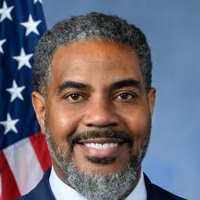
Steven Horsford
Representative
NV-4
This bill, the Social Security Emergency Inflation Relief Act, establishes temporary economic recovery payments for eligible recipients of Social Security, SSI, Railroad Retirement, and Veterans benefits. It provides an additional $200 payment monthly to these individuals from January 1, 2026, through June 30, 2026. These payments are designed to be non-taxable and will not affect eligibility for other federal benefits.
Six Months of $200 'Inflation Relief' Payments Set for Social Security and Veterans Benefits Recipients Starting January 2026
The newly introduced Social Security Emergency Inflation Relief Act is straightforward: it creates a temporary, six-month program to send an extra $200 per month to millions of Americans on fixed federal incomes. This isn't a permanent raise; it’s a targeted economic recovery payment running from January 1, 2026, through June 30, 2026.
Who Gets the Extra Cash?
This isn't a universal payment; it's aimed squarely at those already receiving specific federal benefits. If you currently get a monthly check from Social Security (retirement, survivors, or disability insurance), Supplemental Security Income (SSI), Railroad Retirement, Veterans disability compensation or pension, or a Civil Service Retirement System annuity, you’re on the eligibility list (SEC. 2). The bill makes it clear that even if you qualify for two different benefit types—say, Social Security and a VA pension—you only get one $200 payment per month.
The Fine Print That Matters: No Tax, No Benefit Cuts
For most people receiving federal aid, the biggest concern with any extra money is whether it will mess up their eligibility for other programs like Medicaid or SNAP. This bill cuts through that complexity with clear protections. The $200 payment is explicitly not counted as income or a resource when determining eligibility for any federal or federally-assisted benefit program (SEC. 2). That’s a huge win for SSI recipients, whose benefits are highly sensitive to small changes in income.
Even better, the payments are not taxable income under the Internal Revenue Code. They’re also protected from assignment, levy, or garnishment, just like your regular benefit check, and cannot be taken via administrative offset to pay off non-tax federal debts (SEC. 2).
Think of it this way: if you’re a veteran relying on a pension and SSI, this $1,200 total (over six months) is extra spending power for groceries or utilities, and you don’t have to worry about reporting it to the IRS or losing your housing assistance. This is the definition of clean, direct relief.
Implementation and the Catch
The relevant agencies—Social Security Administration, VA, Railroad Retirement Board, and Office of Personnel Management—must start certifying eligible individuals quickly, no later than 30 days after the bill becomes law. Payments will be made electronically using the same method as your regular benefit, and the Treasury must disburse all funds by July 1, 2026 (SEC. 2).
The catch, however, is the six-month clock. While $200 a month is real money, especially for those on fixed incomes struggling with inflation, the relief is temporary. After the June 2026 payment, the program ends. Recipients will need to budget for that relief to disappear, which could create a financial cliff if economic conditions haven't improved significantly by then. Also, if your underlying benefit is currently suspended due to specific legal restrictions (like being an incarcerated felon), you won't receive the $200 payment, as the bill ties eligibility to being entitled to the base benefit (SEC. 2).
Finally, in a nod to avoiding political branding, the bill specifically prohibits the Secretary of the Treasury from including the President's name on the payments or allowing the President to sign them. This ensures the focus stays on the relief itself, not the politics behind it.