The SAFE Grilling Act directs the Consumer Product Safety Commission to launch a $5 million public awareness campaign to educate consumers on grill safety and fire prevention.
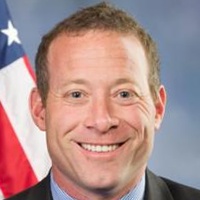
Josh Gottheimer
Representative
NJ-5
The SAFE Grilling Act aims to reduce the high frequency of grill-related injuries and fires by mandating a national public awareness campaign. This initiative requires the Consumer Product Safety Commission to educate the public on essential safety practices and proper grill maintenance. The bill authorizes $5 million in funding to support these efforts and improve household fire safety.
SAFE Grilling Act Authorizes $5 Million for National Safety Campaign to Reduce 22,000 Annual ER Visits.
The SAFE Grilling Act is a straightforward push to lower the number of fire-related injuries in America’s backyards. Citing data from 2017 to 2021, the bill notes that roughly 22,155 people end up in the emergency room every year because of grill-related accidents. To combat this, the legislation mandates that the Consumer Product Safety Commission (CPSC) launch a national public awareness campaign within one year. The goal is simple: teach people how to avoid common mistakes, like letting grease build up or ignoring gas leaks, and back that effort with a $5,000,000 budget.
Heat Map of the Risk
The bill’s findings highlight that this isn't just about the occasional burnt burger; it’s about structural safety. According to Section 2, gas grills alone are responsible for over 9,000 home fires annually. Interestingly, more than a quarter of these fires start on exterior balconies or open porches. For someone living in an apartment complex or a house with a wooden deck, a simple leak or a dirty grill—which accounts for 20% of these fires—can quickly turn a weekend cookout into a call to the fire department. The bill specifically identifies the peak danger zone as the summer months, with July being the busiest time for grill-related incidents.
A $5 Million Safety Manual
Under Section 3, the CPSC is tasked with turning these statistics into actionable advice for the public. The $5 million appropriation is intended to fund education on "best practices," which likely means more visibility for basic maintenance like checking for gas line breaks—a factor in 15% of outdoor grill fires. For the average homeowner or renter, this rollout means more accessible information on how to properly space a grill from a house wall or how to perform a quick safety check before the first flip of the season. The bill focuses entirely on education rather than new mandates or equipment requirements, aiming to change habits rather than hardware.