The Jumpstart on College Act provides funding to states and eligible entities to expand early college high schools and dual or concurrent enrollment programs, aiming to increase the percentage of students earning recognized postsecondary credentials on time, especially for low-income and underrepresented students.
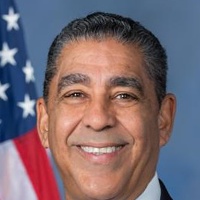
Adriano Espaillat
Representative
NY-13
The Jumpstart on College Act aims to increase the percentage of students, particularly low-income and underrepresented students, who earn a recognized postsecondary credential within the standard time frame. The bill authorizes $250 million in annual funding to provide competitive grants to eligible entities and states to start or support early college high schools and dual or concurrent enrollment programs. Grantees must focus on creating strong support systems, aligning curriculum, and ensuring students are aware of and assisted in enrolling in these programs. Recipients must annually report detailed data on student enrollment, credential attainment, and postsecondary success.
New 'Jumpstart on College Act' Authorizes $250 Million for Free High School College Credits
The aptly named Jumpstart on College Act is looking to significantly expand access to college courses for high school students—the kind that actually count toward a degree. This legislation authorizes a massive $250 million annually, starting in Fiscal Year 2026 and running for six years, to fund competitive grants that kickstart or expand early college high schools and dual enrollment programs across the country. The big goal here is to help students, especially those from low-income backgrounds and groups often underrepresented in higher education, earn a postsecondary credential faster, ideally right around the time they get their high school diploma (Sec. 2).
The Free College Credit Pipeline
Think of this bill as a federal investment in making the first year of college free and accessible to high schoolers. The funding is split two ways: 40% goes directly to partnerships between colleges and local school districts (eligible entities), and 55% goes to States (Sec. 4). For the students, the most important part is the mandate that they will not be required to pay tuition or fees for these postsecondary courses (Sec. 5(i)(3)(A)). For a student looking at $400 or more per credit hour, taking a full year of college courses for free while still in high school is a game-changer for the family budget.
For example, if you’re a parent whose child is participating in one of these programs, they could graduate high school with 30 college credits already banked, saving you thousands in tuition and potentially cutting a full year off their college timeline. The bill requires these programs to focus on creating a clear path—a "program of study"—that leads directly to a "recognized postsecondary credential," which means the courses aren't just random electives; they're part of a plan (Sec. 5(i)(3)(A)).
The Catch: Skin in the Game
While the federal government is putting up the cash, they aren't paying for everything forever. Both the States and the local partnerships must contribute substantial matching funds, showing they are serious about long-term commitment. States receiving grants must match 50% of the grant amount every single year using non-Federal dollars (Sec. 6(b)). For the local partnerships, the matching requirement starts lower but ramps up fast: 20% in the first two years, eventually hitting 50% by Year 6 (Sec. 5(d)). This structure is designed to ensure programs are sustainable once the federal money runs out, but it also means that school districts and colleges in less affluent areas that struggle to raise matching funds might be locked out of this opportunity, despite potentially having the highest need.
What Schools Have to Do to Get the Money
If a local college and school district want a piece of the up to $2 million grant (Sec. 5(c)), they have to do more than just offer classes. They must create a comprehensive support system, including academic and social support services for students, and provide professional development for both high school teachers and college faculty (Sec. 5(h)). This is critical because it ensures that the high school teachers teaching college-level courses meet the same standards as the college faculty (Sec. 5(i)(3)(C)). Furthermore, the bill prioritizes partnerships that serve student populations where at least 51 percent are low-income students (Sec. 5(f)(1)), ensuring the funds target the students who stand to benefit most from this early jumpstart.
States, on the other hand, must use their grant money to implement a statewide strategy to expand access, identify policy obstacles, and update high school graduation requirements to better align with college entrance standards (Sec. 6(f)). This is a crucial, high-level move that could help smooth the transition from high school to college for every student in the state, whether or not they are in a specific grant program.
Accountability and the Data Deep Dive
To make sure this $250 million investment is paying off, the bill demands serious accountability. Every recipient—States and local entities—must report annually on key metrics, including the total number of students enrolled, the percentage who earn a postsecondary credential, and the number of college credits earned (Sec. 7(c)). Crucially, all this data must be broken down by student categories, such as race, gender, disability status, and economic disadvantage (Sec. 7(d)). This level of data disaggregation ensures that the money is actually reaching and benefiting the low-income and underrepresented students the bill is designed to help, making it harder for grant money to be diverted to already well-served populations. It’s the policy equivalent of checking the receipts to make sure the right people got the delivery.