This bill authorizes the minting and sale of commemorative gold, silver, and clad coins in 2029 to celebrate the history and contributions of the United States Foreign Service, with surcharges benefiting the Association for Diplomatic Studies and Training.
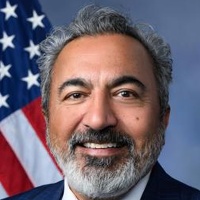
Ami Bera
Representative
CA-6
This Act authorizes the Secretary of the Treasury to mint and issue a series of commemorative gold, silver, and clad coins in 2029 to celebrate the centennial of the United States Foreign Service. The coins will feature designs representing the importance of American diplomacy and the contributions of the Foreign Service. All surcharges collected from the sale of these coins will be paid to the Association for Diplomatic Studies and Training to support its historical preservation work. The Treasury must ensure that the minting and issuance of these coins result in no net cost to the U.S. government.
New Commemorative Coins Will Fund Diplomatic History Education, Not Taxpayers
The United States Foreign Service Commemorative Coin Act is about honoring history and raising money for a good cause—without touching your tax dollars. This bill directs the Secretary of the Treasury to mint and issue three types of commemorative coins in 2029: a $5 gold coin (up to 50,000 units), a $1 silver coin (up to 400,000 units), and a half-dollar clad coin (up to 750,000 units). The main purpose here is twofold: to celebrate the 100th anniversary of the unified U.S. Foreign Service (which happened in 1924) and to generate funds for the Association for Diplomatic Studies and Training (ADST) through coin surcharges.
The Minting Machine and the History Lesson
Think of this as a special edition collectible program where the proceeds go straight to education. The coins will be issued for just one year, starting January 1, 2029 (SEC. 5). The designs must reflect the importance of U.S. diplomacy and the contributions of the Foreign Service (SEC. 4). This isn't just about pretty metal; it’s about funding the people who keep track of our diplomatic history, like the ADST, which collects over 2,600 oral histories from U.S. diplomats.
Who Pays, and Where Does the Money Go?
This is the part that busy people need to know: the program is legally required to be cost-neutral to the government (SEC. 8). That means the coins must be sold at a price that covers their face value, the cost of design and production, plus a surcharge. The government won't spend a dime of your tax money on this. For example, the surcharges are set at $35 for the gold coin, $10 for the silver coin, and $5 for the half-dollar coin (SEC. 7).
All those surcharges—every single dollar—will go directly to the ADST to support their work in collecting, curating, and sharing diplomatic history through oral histories and books (SEC. 7). The Treasury can’t even hand over the money to the ADST until they have recovered all the costs of minting and issuing the coins. This ensures that the coin collectors, not the taxpayers, fund both the production and the educational mission.
The Real-World Impact: Supporting the Storytellers
While this bill doesn't change your commute or your paycheck, it does affect how U.S. history is preserved and taught. The Foreign Service is made up of the people who staff our embassies, negotiate treaties, and help U.S. citizens abroad—often in dangerous places. Over 320 names are on memorial plaques honoring those who died on active duty (SEC. 2). By funding the ADST, this program helps ensure that the experiences of these diplomats—from Thomas Jefferson to today's officers—are recorded and accessible. Essentially, if you buy one of these coins, you are directly funding the preservation of U.S. diplomatic memory, which is crucial for training the next generation of foreign policy experts.