The PAID OFF Act of 2025 restricts certain exemptions under the Foreign Agents Registration Act for agents representing entities owned or controlled by designated countries of concern, subject to a five-year sunset provision.
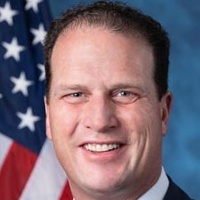
August Pfluger
Representative
TX-11
The PAID OFF Act of 2025 aims to strengthen oversight of foreign influence by limiting exemptions under the Foreign Agents Registration Act (FARA) for agents representing entities owned or controlled by designated "countries of concern." This legislation establishes a formal process requiring Congressional approval via a joint resolution for the Secretary of State to update this list of concerning nations. These significant changes are set to terminate five years after the Act's enactment.
PAID OFF Act Targets Foreign Lobbying: Exemptions Removed for Agents Linked to 'Countries of Concern'
The PAID OFF Act of 2025 (officially the Preventing Adversary Influence, Disinformation, and Obscured Foreign Financing Act) aims to tighten up regulations on foreign influence, specifically targeting certain lobbyists and public relations firms working for foreign governments or corporations. Think of it as patching a few holes in the Foreign Agents Registration Act (FARA), the decades-old law requiring people lobbying on behalf of foreign interests to register with the U.S. government.
The FARA Loophole Closure
Right now, FARA has a few exemptions that let certain agents avoid registration, even if they are working for a foreign entity. For example, some exemptions cover activities that are considered purely commercial or related to non-political activities. This bill wipes those exemptions clean if the foreign principal—the government or corporation—is owned or controlled by a country that the State Department has identified as a “country of concern.” This means that if you’re a PR firm or a lobbyist currently using a commercial exemption to represent a state-owned enterprise from one of these designated countries, you’re going to have to register and disclose your activities, contracts, and payments. The goal here is transparency, forcing more of the money spent on influence campaigns by adversarial nations out into the open.
Who Gets Caught in the Net?
This change primarily affects high-level lobbying firms and agents who have been relying on those FARA exemptions (specifically subsections (d)(1), (d)(2), and (h) of Section 3 of FARA) to keep their work for these specific foreign entities quiet. If you’re a partner at a firm representing a state-run airline or a national oil company from a designated country, you’ll suddenly face a big compliance headache and potentially have to disclose sensitive client information. For the government, the benefit is clear: better tracking of how money from adversarial nations is being spent to influence policy or public opinion here in the U.S. However, the bill doesn’t clearly define what “owned or controlled” means in the context of a corporation, which could lead to some gray areas and legal wrangling over whether a particular company is truly subject to the new rules.
The Secretary of State’s New Power (with a Catch)
The bill also sets up a mechanism for updating the list of “countries of concern” that are subject to these restrictions. The Secretary of State, after consulting with the Attorney General, can propose adding or removing a country from the list. This is a necessary update since geopolitical situations change fast. But here’s the kicker: the change isn't automatic. Congress has to pass a specific joint resolution of approval to make it official. This means that while the Secretary of State can propose the change, Congress holds the ultimate veto power. This legislative check is designed to prevent a single administration from arbitrarily targeting or removing countries for political reasons, ensuring that major foreign policy shifts get buy-in from the legislative branch.
The Five-Year Sunset Clause
One final detail that matters for everyone involved: the changes introduced by this section of the PAID OFF Act are temporary. They are set to expire, or “sunset,” five years after the bill becomes law. This means that Congress will have to actively revisit and reauthorize these restrictions down the road. While temporary measures can be good for testing new policies, it introduces uncertainty for the lobbying firms and foreign entities affected, who will have to plan for a potential regulatory cliff in five years.