This Act establishes a Commission to investigate past U.S. military occupations in the Americas and recommend remedies, including formal apologies and reparations.
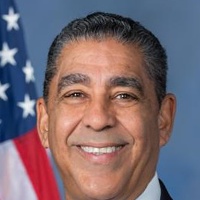
Adriano Espaillat
Representative
NY-13
This Act establishes the Commission to Study and Develop Reconciliation Proposals for Misguided Interventions in the Americas. The Commission is tasked with documenting evidence, analyzing the impact, and recommending remedies for past U.S. military occupations in nations across Latin America and the Caribbean. Its duties include recommending formal apologies and policies to reverse the repercussions of these interventions. The Commission will operate for up to four years before submitting its final report and recommendations to Congress.
U.S. to Investigate Past Military Interventions in the Americas, Setting Aside $20 Million for Accountability Commission
If you’ve ever had to deal with a historical audit at work—the kind where you dig up decades-old files to figure out where things went wrong—you get the basic idea behind the Commission on the United States Occupations in the Americas Act, or the La Comisin de las Ocupacines Americanos Act. This bill isn't about current policy; it’s about establishing an official body to look back at nine specific, controversial U.S. military interventions across Latin America and the Caribbean, spanning from 1909 to 1990. The core mission is to document the evidence, analyze the long-term damage, and figure out how the U.S. might apologize and offer remedies. Essentially, it’s a formal historical reckoning, backed by an authorized budget of $20 million to complete the work over the next four years.
The Historical Audit: What the Commission Will Dig Up
The bill lays out nine specific military actions—in Nicaragua, Mexico, the Dominican Republic, Guatemala, Grenada, and Panama—detailing the casualties and political fallout from each. This is more than just a history lesson; the Commission is tasked with documenting evidence on three key areas: U.S. involvement in internal affairs (like funding regime changes), the treatment of native persons by U.S. forces and U.S.-backed regimes (including repression of basic rights), and the lasting negative effects on the collective psyche and society of each nation. This is the part that connects history to real life: the bill mandates looking at how these interventions might still be shaping politics and stability in these countries today, decades later.
Who’s On the Hook for the Research?
The Commission itself is designed to be a mix of insiders and outsiders. It includes high-level government officials, like the Under Secretary for Western Hemisphere Affairs and current U.S. Ambassadors to the nations being studied. But crucially, it also includes members appointed by the President and Congress, and requires the President to negotiate with the governments of the formerly occupied nations to include their Ambassadors. This structure is intended to ensure that the perspectives of the affected nations are officially represented in the investigation. For those members not already on the federal payroll, the job comes with compensation equivalent to a high-level federal executive for every day worked, plus travel expenses.
The Real-World Ask: Apologies and Remedies
The most important part of the bill isn’t the history, it’s the homework assignment. The Commission must recommend appropriate remedies based on its findings. This includes recommending how the U.S. Government can offer a formal apology for occupations deemed “worthy” and proposing policies, programs, and projects specifically designed to reverse the repercussions of the invasions. Think of this as the attempt to fix the damage. For instance, if the Commission finds that a specific intervention led to the long-term collapse of a nation's infrastructure or political stability, the recommendations could involve aid, educational programs, or other forms of reparatory justice. The Commission has the power to compel testimony and documents, meaning it can subpoena federal agencies and individuals to get the information it needs, a significant investigative authority.
The Bottom Line for Taxpayers and Agencies
This bill is a historical deep dive, but it comes with a price tag and a mandate for cooperation. The $20 million authorized funding comes from U.S. taxpayers. While that’s a small fraction of the federal budget, it’s designated specifically for this historical review. More importantly, the bill requires full cooperation from every executive branch department, agency, or instrumentality. If you work in a federal agency that deals with historical records, foreign policy, or military archives, be prepared for document requests and potential subpoenas. The Commission has a clear deadline: a final report must be submitted to Congress no later than four years after the bill becomes law. This sets the clock for a major, official re-evaluation of a complicated chapter in U.S. foreign policy.