The HEAL-AI Act establishes a grant program to fund the education and training of medical professionals in the use, ethics, and deployment of artificial intelligence in medicine.
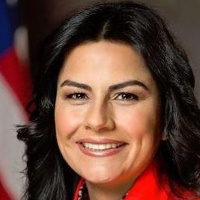
Nanette Barragán
Representative
CA-44
The HEAL-AI Act establishes a competitive grant program, administered by HRSA, to fund the education and training of medical students, residents, and faculty in the use of artificial intelligence in medicine. These grants will support curriculum development focused on AI diagnostics, treatment recommendations, and ethical considerations. Institutions receiving funding must share educational materials publicly and prioritize serving medically underserved communities.
HEAL-AI Act Funds $1 Million Annually to Train Doctors on AI Ethics and Diagnostics
The Healthcare Education in AI Literacy Act, or the HEAL-AI Act, sets up a new federal grant program designed to drag medical education into the 21st century. Essentially, the bill recognizes that artificial intelligence is already changing how doctors diagnose and treat patients, and our medical schools need to catch up. This program, managed by the Health Resources and Services Administration (HRSA), is all about funding the training of medical students, residents, and faculty on how to actually use AI in medicine—and, crucially, how to use it responsibly.
The $100,000 AI Literacy Lifeline
The core of the bill is a competitive grant program open to qualified medical schools and residency sponsoring institutions. If they apply and get approved, they can receive up to $100,000 per year. That money has to be laser-focused on AI education and training. We’re talking about teaching future doctors how to use AI for diagnostics, integrating AI tools into clinical decision-making, and understanding predictive analytics. For the busy parent or worker, this means the doctor looking at your scan or lab results in five years should theoretically be much better trained on the software that helped process that data.
Crucially, the bill mandates that this training must cover ethical issues like bias in algorithms, patient data privacy, and ensuring transparency in how AI makes its recommendations. This is the fine print that actually matters to everyday people. If an AI system is trained mostly on data from one demographic, it might misdiagnose someone from another. The HEAL-AI Act tries to get ahead of that problem by making ethical training a required use of the grant funds. They even capped administrative costs at 10 percent, meaning 90 percent of the money must go straight into the education itself.
Prioritizing Underserved Communities
One provision that stands out is the mandate that the Secretary must give priority to institutions that provide care to medically underserved communities. This is a big deal. If AI tools are going to improve healthcare access and quality, they need to be implemented where they can make the biggest difference—often in rural areas or low-income urban centers. By prioritizing these schools, the bill attempts to ensure that the benefits of AI literacy aren't just limited to high-tech urban hospitals.
However, there are limits. The bill only authorizes $1 million annually from fiscal years 2026 through 2030. While $100,000 sounds like a lot for one grant, if dozens of medical schools apply, that $1 million won't go far, especially considering the cost of developing entirely new, high-tech curricula. Furthermore, institutions are limited to receiving grants in only two institutions per Census Division, promoting geographic diversity but potentially limiting funding where the need might be highest.
The Open-Source Education Requirement
Perhaps the most practical outcome for the wider public is the reporting requirement. Any institution that receives grant money must submit an annual report detailing how they used the funds. More importantly, no later than 30 days after submitting that report, the institution must make any grant-funded educational materials publicly available online. This means that curricula, case studies, and training tools developed with federal money won't be locked behind paywalls. This open-source approach will allow smaller, less-funded institutions—or even independent developers—to benefit from the materials and rapidly spread AI literacy across the entire medical field, speeding up the overall adoption of safe, ethical AI practices.