This bill mandates that U.S. representatives at international financial institutions oppose fossil fuel financing and reduces U.S. contributions to institutions that continue to fund such activities, while also prohibiting direct U.S. foreign assistance for fossil fuel projects.
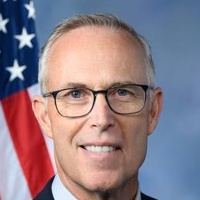
Jared Huffman
Representative
CA-2
The Sustainable International Financial Institutions Act of 2025 mandates that U.S. representatives at major international financial institutions must actively promote clean energy and oppose all financing for new or expanded fossil fuel activities. This bill further requires the U.S. to reduce its contributions to any institution that finances fossil fuel projects by the amount of that financing, holding those funds in escrow until compliance is met. Additionally, it prohibits U.S. foreign assistance agencies from supporting any foreign fossil fuel activities or related infrastructure.
US Threatens to Cut Funding to Global Banks Dollar-for-Dollar Over Fossil Fuel Financing
The Sustainable International Financial Institutions Act of 2025 is essentially the U.S. telling the world’s biggest development banks, like the World Bank and the African Development Bank, that if they fund a new fossil fuel project, the U.S. will immediately cut its own contribution to that bank by the exact same amount. This isn’t a suggestion; it’s a hard financial penalty written into the bill. The goal is clear: force a rapid global transition to clean energy by leveraging U.S. financial muscle at these institutions. Furthermore, the bill mandates that U.S. government agencies—like the Export-Import Bank and the Development Finance Corporation—are totally prohibited from providing any assistance, financial or technical, for any foreign fossil fuel activity, including related infrastructure projects. It’s a complete stop sign on U.S. support for international oil, gas, and coal.
The Global Financial Leverage Play
Under Section 2, the U.S. Executive Directors at a dozen major International Financial Institutions (IFIs) are required to use their vote to oppose any loan, investment, or technical assistance that supports new fossil fuel capacity or even extends the life of existing capacity. Think of an old power plant in a developing country needing a critical upgrade to keep the lights on—this bill says the U.S. must vote no on funding that upgrade, even if it’s just maintenance. The bill also requires these directors to push for phasing out funding for internal combustion engine cars and buses by 2031, aiming to accelerate the shift to electric vehicles globally.
Here’s where it gets real: the Reduction of United States Contributions clause. If the World Bank (or any other specified IFI) finances a $100 million gas pipeline project, the U.S. Secretary of the Treasury must reduce the U.S. contribution to that bank by $100 million. That money doesn’t disappear; it goes into an escrow account. The IFI only gets the money back if the Secretary certifies to Congress that the institution has completely stopped funding new fossil fuel capacity. For the IFIs, which rely on U.S. funds to maintain their lending capacity for all projects—including clean energy, healthcare, and education—this is a massive, immediate financial threat that could destabilize their operations.
The Broad Definition That Hits Hard
The bill’s definitions of “fossil fuel activity” and “fossil fuel” are sweeping. “Fossil fuel activity” covers everything from exploration and mining to transportation, distribution, and even the construction or operation of processing plants. This means that if a developing nation needs U.S. technical assistance to improve its existing electrical grid (which currently carries some fossil fuel power), that assistance could be blocked under Section 3’s Prohibition on Financial Support for Foreign Fossil Fuel Activities because the grid is related infrastructure. For developing nations, many of whom rely on stable, affordable energy from existing sources (like natural gas) as a bridge to cleaner sources, this bill could mean sudden funding cuts and operational disruption, potentially slowing down their economic development and energy security efforts.
What This Means for Everyday Life
For the average person in the U.S., the impact is indirect but significant. On one hand, this bill is the strongest action yet to ensure U.S. taxpayer dollars spent internationally are aligned with aggressive climate goals. If you care deeply about climate change, this bill is a powerful lever. On the other hand, the mechanism of reducing IFI contributions could have unintended consequences. If the IFIs lose significant U.S. funding capacity, they have less money overall to fund projects like schools, hospitals, and clean water initiatives in poor countries. This could mean fewer resources available for global stability and development, which ultimately affects global supply chains and geopolitical stability. Furthermore, if the escrow account holds money for years, U.S. contributions aren’t being used for their intended purpose, effectively tying up taxpayer funds without immediate benefit, either domestically or internationally.