The SCAM Act establishes a joint task force, led by the Department of Defense, to investigate and disrupt transnational cybercrime and scam networks, with a priority focus on those linked to the Chinese Communist Party in the Indo-Pacific region.
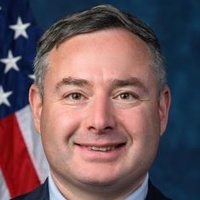
Eugene Vindman
Representative
VA-7
The SCAM Act establishes a joint task force, led by the Department of Defense, to investigate and disrupt transnational cybercrime and scam networks, with a priority focus on those linked to the Chinese Communist Party in the Indo-Pacific. This task force will coordinate across numerous federal agencies to protect Americans from significant financial losses due to these scams. Within one year, the task force must report findings and recommend policy options, including sanctions and cyber actions, to combat these threats. The legislation aims to address the national security and economic risks posed by these criminal operations.
New SCAM Act Launches DOD-Led Task Force to Fight $44 Billion Foreign Cybercrime Rings Targeting Americans
If you’ve ever gotten a text message that started with, “Hey, is this Sarah?” or a phone call warning you about a non-existent tax debt, you know the digital scam game is relentless. Now, the government is getting serious about the source of the problem. The Stopping Cross-border Attacks and Manipulation Act (SCAM Act) is setting up a massive, multi-agency task force, led by the Department of Defense (DOD) and US Cyber Command, specifically to investigate and disrupt transnational organized crime (TOC) groups running these digital scams from overseas, primarily in Southeast Asia.
This isn’t about chasing down individual phishing emails; it’s about going after the $43.8 billion-a-year operations that are stealing life savings, primarily targeting U.S. citizens, especially older and more isolated individuals. The bill recognizes that these “fraud farms” are not just financial crimes—they are national security threats, often linked to foreign governments and even used for espionage near U.S. military bases. The goal is to coordinate a response that uses everything from financial sanctions to diplomatic pressure to shut these networks down.
The All-Star Team Fighting Digital Fraud
This new Joint Task Force on Transnational Cybercrimes is essentially the Avengers of federal agencies, but focused on digital crime. It includes heavy hitters from the DOD and US Cyber Command, but also key players who deal with the financial and consumer fallout. We’re talking representatives from the Department of State (for diplomacy), the Department of the Treasury (for sanctions and asset forfeiture), the FTC and FCC (who hear all those scam reports), the FBI, and the Department of Justice. The bill even requires representatives from state and local governments and relevant non-profits to be included, acknowledging that this problem hits communities directly.
The task force has a clear priority: focus on scam operations with ties to the Chinese Communist Party (CCP) in the Indo-Pacific region. This focus is driven by findings that these TOC networks are not only stealing money but are also being used to move sensitive personal data of U.S. citizens to a hostile foreign power, posing a direct threat to economic security and individual privacy.
What They Have to Deliver (And Why It Matters to You)
The task force isn't just meeting; it has a hard deadline. Within one year of the Act becoming law, they must submit a comprehensive report to Congress. This report is where the rubber meets the road for everyday people.
First, they must detail emerging threats. This includes how these groups are stealing data, cultivating relationships with adversarial governments, and even acquiring land near critical U.S. military installations. For anyone concerned about national security, this intelligence gathering is crucial.
Second, they must recommend policy options. This is where the real change comes in. They will propose using tools like sanctions and civil asset forfeiture to financially cripple these operations. Imagine the U.S. Treasury freezing the assets of the shell companies running these scam centers—that’s the kind of disruption they are aiming for.
Third, they must propose a framework to support society. This is perhaps the most direct benefit for the average American. The framework needs to include methods for quickly sharing scam-related information and protective guidance to disproportionately affected groups. This means better, faster warnings about new scams, potentially shared through public facilities and local venues, ensuring that protective information reaches those who need it most, like socially isolated or elderly individuals.
The Real-World Impact: More Than Just Money
For the busy professional or small business owner, the SCAM Act means the government is finally treating this massive, global digital theft as the serious, coordinated threat it is. While the bill is focused on national security, the practical effect is that it aims to reduce the sheer volume of fraudulent calls, texts, and emails flooding our inboxes and phones. It’s a move from playing defense (teaching people to spot scams) to playing offense (disrupting the criminal organizations running them).
There is also a significant humanitarian angle. The findings section highlights that these TOC networks force an estimated 300,000 individuals, sometimes including U.S. citizens, into modern slavery conditions to run these cyber scam operations. By disrupting the financial flow, the task force aims to tackle this human rights crisis head-on.
This is a complex bill with broad scope, and the medium level of vagueness means the effectiveness will largely depend on how aggressively this multi-agency task force coordinates and implements its recommendations. The task force is authorized to assist in implementing its proposals, and its authority sunsets five years after the report is submitted, giving them a clear, time-bound mission to fundamentally change the landscape of transnational cybercrime.