The GRID Act repeals the federal standard for electric vehicle charging programs established under the Public Utility Regulatory Policies Act of 1978 (PURPA).
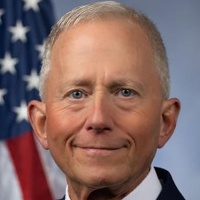
Jefferson Van Drew
Representative
NJ-2
The Guarding Ratepayers from Imposed EV Charging Directives Act (GRID Act) repeals the existing federal standard for electric vehicle charging programs established under the Public Utility Regulatory Policies Act of 1978 (PURPA). This action removes the mandate for utility regulators to consider and adopt specific electric vehicle charging program standards. The bill also includes conforming amendments to remove related references throughout PURPA.
GRID Act Repeals Federal Standard for Utility-Managed EV Charging Programs
The “Guarding Ratepayers from Imposed EV Charging Directives Act,” or the GRID Act, is a short, sharp piece of legislation that does one thing: it completely wipes out the existing federal standard governing how utility companies approach electric vehicle (EV) charging programs. Specifically, it repeals paragraph (21) of section 111(d) and paragraph (8) of section 112(b) of the Public Utility Regulatory Policies Act of 1978 (PURPA), effectively removing the federal directive for utilities to consider and implement EV charging programs.
The Fine Print: What Just Got Deleted?
To understand the impact, you have to know what those PURPA sections did. They essentially required state utility regulators to consider whether it was appropriate to adopt standards related to EV charging programs. This wasn't a mandate for every utility to install chargers everywhere, but it was a clear federal push—a regulatory nudge—to ensure that utilities were actively planning for the coming wave of electric cars. Think of it as the federal government telling local power companies, “Hey, EVs are coming, you need a strategy for managing charging demand and infrastructure.” The GRID Act pulls that nudge back entirely, along with several conforming amendments that scrub any remaining reference to the standard from PURPA.
Hitting the Brakes on Infrastructure
For the average person who is maybe thinking about buying an EV—or who already owns one—this repeal has significant real-world implications. The federal standard encouraged utilities to get involved in EV infrastructure development, which often means standardized, reliable, and sometimes subsidized charging stations. By removing this requirement, the bill leaves the decision entirely up to individual states and utility companies, which could lead to a patchwork of deployment strategies, or worse, no strategy at all.
Imagine you live in a multi-unit building or a rural area. Utility involvement often ensures that infrastructure gets built even where it’s not immediately profitable for private companies. If this federal guidance is gone, utilities might slow down their investments, arguing that EV infrastructure is not their core business. This could mean fewer public charging stations, slower installation of high-speed chargers, and potentially higher costs passed on to consumers because the market is less regulated. The result? A tougher time for EV owners and a slower transition to electric transportation.
Utility Flexibility vs. Consumer Access
On the flip side, the bill’s proponents might argue that this repeal offers necessary regulatory flexibility. Utility companies gain freedom from what they might see as burdensome federal oversight, allowing them to tailor their investments to their specific grid needs without a one-size-fits-all federal directive. This could, in theory, save ratepayers money by preventing utilities from being forced to invest in programs they deem unnecessary. However, the risk is that without the federal impetus, utility monopolies—which control the power grid—might simply choose the cheapest, least comprehensive option, prioritizing short-term cost savings over long-term infrastructure needs. For the busy commuter relying on public charging, or the delivery driver needing reliable charging on the road, that lack of standardization and slower rollout could quickly become a major headache.