This bill authorizes the President to award the Medal of Honor to E. Royce Williams for his extraordinary acts of valor as a Navy pilot during the Korean War.
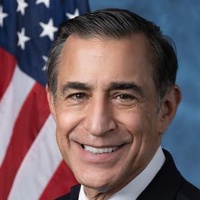
Darrell Issa
Representative
CA-48
This bill authorizes the President to award the Medal of Honor to E. Royce Williams for his extraordinary heroism during the Korean War. On November 18, 1952, then-Lieutenant Williams engaged seven Soviet MiG-15 fighters alone, successfully downing four of the aircraft despite being significantly outgunned. The legislation waives standard time limitations to ensure this long-overdue recognition for his valorous service.
Proposed Legislation Authorizes Medal of Honor for Korean War Ace E. Royce Williams Following Decades of Secrecy
This bill clears the legal path for the President to award the Medal of Honor to retired Navy Captain E. Royce Williams for his extraordinary actions on November 18, 1952. By specifically waiving the standard time limits found in Section 8298 of Title 10 of the U.S. Code, the legislation allows for the highest military distinction to be granted more than 70 years after the event. The bill seeks to formally recognize a dogfight that was kept classified for decades to avoid a direct diplomatic escalation with the Soviet Union during the Cold War.
The 35-Minute Miracle
On a snowy day in 1952, then-Lieutenant Williams was part of a four-plane team from the USS Oriskany tasked with intercepting seven Soviet MiG-15s near the Korea-Russia border. After his flight leader and wingman were forced to retreat due to mechanical issues, Williams found himself alone against six superior enemy jets. The bill details how Williams engaged in a 35-minute battle—the only naval dogfight over water in the entire war—where he shot down at least four, and likely five, of the seven MiGs. Despite his F9F-5 Panther being riddled with 263 holes and losing its hydraulic and electrical systems, Williams managed to land the aircraft on his carrier at a dangerous 170 knots, surviving with nothing but a chafed neck.
Correcting the Classified Record
For years, Williams was officially credited with only one kill because the full details of the encounter were caught by a top-secret National Security Agency unit codenamed "Canoe." This unit intercepted Soviet communications that confirmed the higher death toll, but the information remained buried to prevent the public from knowing the U.S. had engaged Soviet pilots directly. It wasn't until the Cold War ended and Russia released its own records that the full scope of Williams’ achievement was verified. This bill effectively aligns U.S. military honors with the now-unclassified reality of that day, moving beyond the Silver Star he was originally awarded in an era of high-stakes secrecy.
A Lifetime of Service
Beyond that single afternoon of high-altitude combat, the legislation highlights a career that spanned over 30 years and included more than 220 missions across both the Korean and Vietnam Wars. While the Secretary of the Navy recently upgraded Williams' award to the Navy Cross in early 2023, this specific bill is the necessary legislative "key" to bypass the bureaucracy and authorize the Medal of Honor. For a veteran who retired in 1984 and spent decades keeping a national secret, the bill represents a final, public accounting of one of the most significant aerial feats in American history.