The Open-Source AI Leadership Act directs the Department of Commerce to promote the adoption of qualified open-source AI models while assessing and reporting on the national security risks posed by foreign adversary AI.
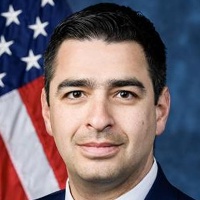
Gabe Evans
Representative
CO-8
The Open-Source AI Leadership Act directs the Secretary of Commerce to promote the adoption and development of U.S.-based open-source artificial intelligence models. Additionally, the bill mandates annual assessments and public reporting on the security risks associated with AI models developed by foreign adversaries. It explicitly clarifies that the Secretary does not have the authority to ban or restrict open-source AI models.
Open-Source AI Leadership Act: US to Fast-Track Local Tech While Flagging Foreign Risks
The federal government is looking to put its thumb on the scale for American-made artificial intelligence. This bill directs the Secretary of Commerce to actively clear the path for 'qualified open models'—basically, AI software built by U.S. companies where the underlying code and 'weights' (the digital brains) are publicly available for anyone to download and use. By designating a single point of contact and hunting down regulatory barriers, the government aims to make it easier for a local startup or a tech-savvy small business to build their own tools using these American open-source foundations rather than relying on expensive, closed-door corporate software.
Boosting the Home Team
Under this plan, the Department of Commerce isn't just watching from the sidelines; they’re tasked with actively supporting the adoption of U.S. open-source AI across state lines and international borders. For a software developer in a mid-sized city or a manufacturing plant looking to automate its supply chain, this could mean more standardized frameworks and 'best practices' (Sec. 2) that make it safer and cheaper to integrate AI into their daily operations. The bill encourages the Secretary to enter into agreements with startups and state agencies to ensure that the next wave of tech innovation is built on transparent, U.S.-based code rather than black-box systems.
The Foreign Red Flag List
While the bill pushes American tech forward, it keeps a very wary eye on the competition. The Secretary of Commerce will be required to start a public 'naughty list' for AI models coming from 'covered nations' (foreign adversaries). Every year, the government will publish a report (Sec. 3) breaking down the risks of these foreign models, specifically looking at whether they play fast and loose with your personal data, if they lack safety features to prevent misuse, or if they could be used to develop dangerous biological or nuclear capabilities. For a business owner, this acts like a consumer warning label—helping you understand if that free foreign AI tool you just downloaded might actually be a backdoor for data theft or a national security risk.
Keeping the Guardrails in Place
A major sticking point in tech policy is whether the government will eventually try to ban certain types of software. This bill includes a 'Rule of Construction' (Sec. 4) that explicitly tells the Secretary of Commerce: you don't have the power to ban or restrict open AI models just because of this Act. However, there is some gray area. The bill gives the Secretary the power to take 'appropriate actions' to address barriers to U.S. tech (Sec. 2), which is a bit vague. While it’s great for clearing red tape, 'appropriate action' is a broad term that could mean anything from tax incentives to new, complex industry standards that small players might find hard to follow. The goal is to keep the U.S. in the lead for the next decade, with the mandatory reporting on foreign risks set to run for the next 10 years.