The Not In My Barn Yard Act prohibits the federal government from using eminent domain to seize agricultural land if a feasible alternative for the project exists.
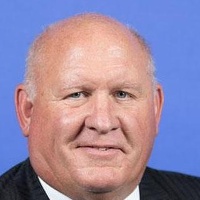
Glenn Thompson
Representative
PA-15
The "Not In My Barn Yard Act" restricts the federal government from using eminent domain to seize agricultural land if a feasible alternative for the project exists. This legislation protects land currently or recently used for farming, ranching, and forestry from federal acquisition.
Not In My Barn Yard Act Blocks Federal Land Seizures: New Protections for Farmers and Ranchers
The federal government's power of eminent domain—the ability to take private property for public use—is getting a major reality check when it comes to American farmland. The 'Not In My Barn Yard Act' establishes a strict prohibition against the federal government seizing agricultural land if there is any other 'feasible alternative' for the project. Whether the government wants to build a highway, a pipeline, or a facility, they can no longer default to taking a family farm just because it’s the easiest path on a map. This protection applies to any land used for farming, ranching, or timber production within the last five years, ensuring that even land in crop rotation or temporary fallow periods is shielded.
Putting the Brakes on Federal Takings
Under Section 2 of the bill, federal agencies are barred from exercising eminent domain on agricultural land unless they can prove no other viable option exists. Think of a scenario where a new federal utility corridor is planned: if the government could theoretically route that line through non-agricultural land or along an existing easement, they are now legally required to do so rather than cutting through a working cattle ranch. However, there is a specific 'small-scale' exception. If a plot is 10 acres or less and generates less than $1,000 in annual sales, it doesn’t qualify for these protections. This means a hobby gardener’s backyard might not get the same shield as a full-scale commercial timber operation or a mid-sized dairy farm.
The 'Feasible' Fine Print
While the bill is a win for land security, the real-world impact hinges on one word: 'feasible.' The legislation doesn't strictly define what makes an alternative feasible. For a construction foreman or a project manager, 'feasible' might mean 'affordable,' while for a landowner, it means 'physically possible.' This ambiguity creates a potential gray area where federal agencies and landowners might end up in a tug-of-war over whether a more expensive alternative route counts as a valid reason to spare a farm. Additionally, if the government already started the paperwork to take your land before this Act is signed, these new rules won't help you; Section 2(a) explicitly states the prohibition doesn't apply to proceedings already in progress.
Protecting the Breadbasket
For the roughly 2 million farms across the U.S., this bill offers a layer of predictability that has been missing. By broadly defining agricultural land to include everything from forestry to ranching (Section 2(b)), the bill recognizes that land is a worker's primary asset. By forcing the government to look elsewhere first, the bill aims to prevent the fragmentation of productive soil, which often happens when a federal project slices a large property in half, making it difficult to move machinery or graze livestock. It’s a shift in priority that puts the burden of proof on the bureaucracy rather than the person driving the tractor.