This Act establishes a competitive grant program and dedicated fund to support international conservation efforts for critically endangered animal species.
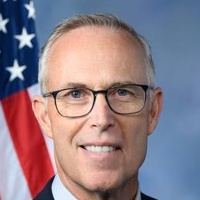
Jared Huffman
Representative
CA-2
The Critically Endangered Animals Conservation Act of 2026 establishes a dedicated federal fund to support international projects aimed at protecting and recovering critically endangered species. Through a competitive grant program, the Secretary of the Interior will provide financial assistance for habitat restoration, anti-poaching efforts, and scientific research. This initiative seeks to ensure the long-term survival of threatened wildlife by fostering global cooperation and community-led conservation.
U.S. to Launch $5 Million Annual Grant Fund for Global Wildlife Conservation Starting in 2027
The federal government is looking to step up its game in the fight against extinction with the Critically Endangered Animals Conservation Act of 2026. This bill sets up a dedicated grant program specifically to protect the world’s most vulnerable creatures—those listed as Endangered or Critically Endangered on the IUCN Red List. Starting in 2027 and running through 2032, the government plans to chip in $5 million a year to a new fund. This money isn't just for U.S. animals; it’s designed to help wildlife management authorities and expert groups in other countries protect species in their natural habitats. Think of it as a competitive startup fund, but instead of tech, the "product" is a viable wild population of rhinos, sea turtles, or rare primates.
The Global Grant Game
If this bill moves forward, the Secretary of the Interior gets a new role as a global conservation venture capitalist. Foreign governments and conservation experts can apply for grants to do the heavy lifting: restoring habitats, monitoring population trends, and training local law enforcement to stop illegal poaching and trade. For those of us who care about where our tax dollars go, the bill has a few specific guardrails. For instance, SEC. 3 explicitly bans using this money for captive breeding unless the animals are being released back into the wild as a last resort. It also requires the Secretary to check for "free, prior, and informed consent" from indigenous peoples and local communities in the project areas. This is a nod to the reality that conservation only works when the people living next to the habitat are on board, not just being told what to do by a distant government.
Discretion and the Fine Print
While the goal is noble, there is a fair amount of "fine print" that gives the Secretary of the Interior significant power. Under SEC. 2, the Secretary can decide to fund species that aren’t even officially listed as endangered yet if they believe there are "new or emerging threats." While this flexibility allows for quick action, it also means the criteria for who gets a slice of the $5 million can be a bit subjective. Additionally, the bill gives preference to projects that already have matching funds. For a small, local conservation group in a developing country, this might feel like a "the rich get richer" scenario, making it harder for them to compete against large, well-funded international NGOs even if their local knowledge is superior.
Transparency vs. Privacy
For the data nerds and transparency advocates, the bill mandates that grant recipients submit progress reports that will be made available to the public. However, there’s a catch: SEC. 3 allows the Secretary to keep certain documents confidential. While this makes sense for protecting the exact location of a rare rhino to prevent poaching, it could also be used to shield underperforming projects from public scrutiny. As the program rolls out, the real-world impact will depend on how strictly these reports are vetted. For the average person, this bill represents a relatively small federal investment—about the cost of a few miles of highway—aimed at preventing the permanent loss of global biodiversity, with the hope that better-trained local rangers and healthier habitats will keep these species around for the next generation.