The Protect American Values Act prohibits the use of federal funds to implement or enforce the Department of Homeland Security’s "Public Charge Ground of Inadmissibility" rule.
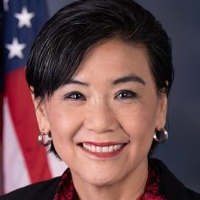
Judy Chu
Representative
CA-28
The Protect American Values Act seeks to block the implementation and enforcement of the Department of Homeland Security’s "Public Charge Ground of Inadmissibility" rule. The bill asserts that this policy harms immigrant families and local economies by restricting access to essential food, housing, and medical care. Consequently, it prohibits the use of federal funds to carry out or administer the rule.
Protect American Values Act Prohibits Federal Funding for 'Public Charge' Rule to Safeguard Immigrant Access to Health and Housing
The Protect American Values Act is a direct strike against the Department of Homeland Security’s (DHS) "Public Charge Ground of Inadmissibility" rule. By cutting off all federal funding for the implementation, administration, or enforcement of this rule (Section 3), the bill effectively freezes a policy that would otherwise allow the government to deny legal status to immigrants who use—or are deemed likely to use—public benefits like food assistance, Medicaid, or housing vouchers. It’s a move designed to keep the safety net intact for millions of families without the fear that seeking a doctor's visit or a meal will derail their path to citizenship.
The Cost of Fear
The bill’s "Sense of Congress" (Section 2) lays out a stark reality: when people are afraid to use health and nutrition programs, the whole community pays. The legislation points to the DHS’s own data, which warns that the public charge rule leads to increased poverty, higher rates of obesity and malnutrition, and a rise in communicable diseases. For a local hospital or a small-town clinic, this translates to more "uncompensated care"—basically, people showing up in the ER with advanced illnesses because they were too scared to get a preventative check-up. By blocking the rule, the bill aims to prevent these "downstream" economic hits to local businesses and healthcare systems that rely on a healthy, stable workforce.
Protecting the Next Generation
A major focus here is the impact on "mixed-status" families—households where some members are citizens and others are not. The bill explicitly notes that the current DHS rule creates a "chilling effect," where parents might pull their U.S. citizen children out of essential programs to avoid any risk to their own legal standing. By stopping the rule’s enforcement, the Act seeks to ensure that a child’s access to nutrition and healthcare isn't determined by their parents' immigration paperwork. It treats these services not just as individual benefits, but as tools for "self-sufficiency" that allow families to continue contributing to the nation’s economy.
Drawing a Line on Executive Power
Beyond the immediate health and food impacts, this bill is a pushback against what it describes as a circumvention of Congress. It argues that the DHS rule reverses over 140 years of established policy in a way that lawmakers never intended. By using the power of the purse to block funding, the Act attempts to re-establish the status quo, ensuring that the criteria for becoming a lawful permanent resident aren't suddenly shifted by sub-regulatory guidance or administrative tweaks that bypass the legislative process.