This bill directs the President to remove United States Armed Forces from unauthorized hostilities within or against Cuba.
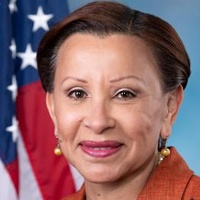
Nydia Velázquez
Representative
NY-7
This bill directs the President to remove United States Armed Forces from any unauthorized hostilities within or against the Republic of Cuba. It asserts that current military actions in the region lack the necessary congressional declaration of war or specific authorization. The directive includes exceptions for self-defense against imminent threats and ongoing lawful counternarcotics operations.
New Joint Resolution Directs Withdrawal of Unauthorized U.S. Forces from Cuba Within 30 Days
This joint resolution is a legislative 'hard reset' on military activity involving Cuba. It explicitly directs the President to pull U.S. Armed Forces out of any hostilities within or against the Republic of Cuba unless Congress has specifically given the green light through a formal declaration of war or a specific authorization for military force. By invoking the War Powers Resolution, the bill defines any blockade or quarantine as an act of 'hostility,' essentially saying that if the U.S. is flexing military muscle in Cuban waters or territory without a vote from your representatives, it has to stop.
Drawing the Line on War Powers The core of this bill is about who gets to hold the remote control for military action. Under Section 1, the bill clarifies that Congress hasn't authorized force against Cuba, meaning any current combat or aggressive maneuvers are technically off-book. For someone working a 9-to-5 or running a job site, this might seem like high-level legal maneuvering, but it’s really about accountability for where tax dollars and service members are sent. By utilizing expedited congressional procedures, the bill ensures that this isn't just a suggestion—it’s a fast-tracked mandate for the executive branch to align with constitutional requirements.
The 'Safety Switch' Provisions While the bill is firm about stopping unauthorized fights, it includes specific carve-outs to ensure the U.S. isn't left vulnerable. Section 2 clarifies that this directive does not stop the military from defending the country against an imminent armed attack. It also protects ongoing counternarcotics operations. This means if you’re a Coast Guard member patrolling for drug subs or a sailor stationed at Guantanamo Bay for defensive purposes, your day-to-day mission likely won't change. The bill isn't a total military exit; it’s a targeted strike against unauthorized 'hostilities'—the kind of escalations that lead to long-term conflicts without a clear public debate.
Checks, Balances, and the Chain of Command For the executive branch and military leadership, this bill creates a stricter 'look but don't touch' policy regarding Cuba. It removes the gray area where a President might use a blockade or a show of force as a diplomatic tool without asking Congress first. By tying the removal of forces to Section 1013 of the Department of State Authorization Act, the bill puts teeth into the requirement. It ensures that if the U.S. is going to engage in a conflict with a neighbor just 90 miles off the coast of Florida, that decision has to happen in the light of day on the floor of the House and Senate, rather than behind closed doors in the Situation Room.