This proposed constitutional amendment would restrict voting in all federal elections exclusively to United States citizens.
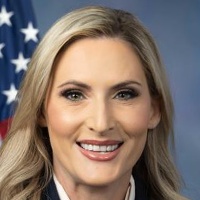
Laurel Lee
Representative
FL-15
This proposed constitutional amendment would explicitly restrict voting in all federal elections—including those for President, Vice President, and Congress—to United States citizens. It mandates that state legislatures establish enforcement measures, while granting Congress the authority to oversee and regulate these requirements nationwide.
Constitutional Amendment Proposes Strict Citizen-Only Voting for Federal Elections and Expands Congressional Oversight
This joint resolution proposes a massive change to the U.S. Constitution: a formal amendment stating that only U.S. citizens can vote in federal elections. While most people assume this is already the standard, this bill would lock it into the Constitution for every primary and general election involving the President, Vice President, and Congress. It doesn't just set a rule; it gives every state legislature the job of passing 'appropriate legislation' to enforce it, while simultaneously giving Congress the ultimate 'veto' power to step in and change those state rules whenever they see fit.
Drawing the Line at the Ballot Box
Currently, federal law already prohibits non-citizens from voting in federal elections, but this amendment would move that requirement from a standard law into the Constitution itself. This means it would be much harder to change in the future. For a regular voter, the immediate impact would likely show up at the DMV or the registrar's office. If your state passes new enforcement laws as required by this amendment, you might see more rigorous documentation requirements to prove citizenship when you register to vote. For example, a naturalized citizen who has been voting for years might find themselves needing to provide specific proof of citizenship again if their state legislature decides to overhaul its verification systems under this new mandate.
The Federal Tug-of-War
One of the most interesting parts of this bill is the power dynamic between the states and D.C. The text says state legislatures 'shall' create enforcement laws, but then adds that Congress can 'make or alter' those regulations at any time. This is a bit of a double-edged sword. On one hand, it could ensure that a voter in Ohio and a voter in Florida face the same rules. On the other hand, it creates a 'Medium' level of vagueness regarding what 'appropriate legislation' actually looks like. If you’re a local election official or a poll worker, you might find yourself caught in the middle of a legal back-and-forth if Congress decides to override your state’s specific way of verifying citizenship.
Local Rules vs. Federal Mandates
While this bill specifically targets federal offices, it could create a complicated ripple effect for local jurisdictions. Currently, a handful of cities across the U.S. allow non-citizens (like legal permanent residents who pay local taxes) to vote in municipal contests, such as school board or mayoral races. If this amendment passes, these cities would have to maintain two completely separate voter rolls and ballot types—one for the federal races and one for the local ones—to ensure no overlap occurs. This could lead to increased administrative costs for local governments, which are ultimately funded by your local property and sales taxes. It’s a move toward national uniformity for the big-ticket races, but it adds a layer of complexity for any town that handles its local elections differently.