This bill celebrates the 50th anniversary of the Magnuson-Stevens Fishery Conservation and Management Act and reaffirms commitment to its science-based framework for sustainable and profitable U.S. fisheries.
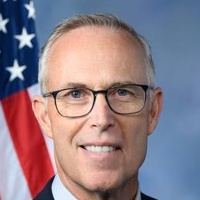
Jared Huffman
Representative
CA-2
This resolution celebrates the 50th anniversary of the Magnuson-Stevens Fishery Conservation and Management Act (MSA), recognizing its crucial role in establishing sustainable and profitable U.S. fisheries management. The MSA has successfully prevented overfishing, rebuilt numerous fish stocks, and secured the economic and cultural importance of marine resources. Congress reaffirms its commitment to strengthening this vital, science-based law to address modern challenges facing American fishing communities.
Celebrating 50 Years of Sustainable Fishing: How the Magnuson-Stevens Act Keeps Seafood on Your Table
Alright, let's talk fish, literally. We're looking at a Concurrent Resolution from Congress that's basically a big shout-out to a piece of legislation that’s been quietly doing some heavy lifting for half a century: the Magnuson-Stevens Fishery Conservation and Management Act (MSA). Think of this as Congress taking a moment to pat itself on the back for a job well done, specifically for the MSA hitting its 50th anniversary on April 13, 2026.
The Big Picture: Why This Act Matters to Your Dinner Plate
So, what's the MSA all about, and why should you care? This resolution reminds us that marine fish aren't just pretty to look at; they're huge for our economy, our food supply, and even our cultural heritage. We're talking about an industry that pulls in a whopping $319 billion in sales, supports over 2.1 million jobs, and fuels 204 million saltwater fishing trips every year. That's a lot of folks working, playing, and eating thanks to healthy oceans. It also gives a nod to Indigenous and Tribal communities who’ve been stewards of these resources "since time immemorial," recognizing their critical role.
Before the MSA came along in 1976, our waters were a bit of a free-for-all. Foreign fleets were essentially pillaging our fish stocks, threatening the livelihoods of American fishing communities. The MSA stepped in, extended federal control 200 nautical miles offshore, kicked out those unregulated foreign vessels, and made sure American fishermen had priority access. It was a game-changer, setting up a national program for conservation based on science, transparency, and collaboration. This means fishermen, state managers, scientists, and even Indigenous and Tribal members get a seat at the table in 8 regional fishery management councils to make decisions about local fish stocks. It’s democracy in action for our oceans, ensuring that the folks whose businesses and communities depend on these resources are part of the management process.
Keeping Our Fisheries Healthy and Our Pockets Full
The resolution points out that the MSA has been incredibly effective. It's helped prevent overfishing, rebuilt 52 fish stocks (that’s a lot of fish!), and kept overfishing to a mere 4% of managed stocks in 2025. Plus, it’s reduced bycatch – that’s when fishermen accidentally catch other marine life they weren’t targeting. All these efforts mean more long-term economic and social benefits, a safe and sustainable seafood supply, and protected habitats for fish to do their thing: spawn, breed, feed, and grow.
Congress is basically saying, “Hey, this thing works!” They’re celebrating the lasting impact on coastal economies and marine ecosystems, honoring the men and women who brave the seas to bring us seafood, and commending everyone involved in upholding the MSA’s principles. And here’s the kicker: they’re reaffirming their commitment to a strong, science-based MSA. Why? Because there are still challenges ahead, like persistent overfishing, changing ocean conditions (hello, climate change!), fishing disasters, and illegal fishing by foreign fleets. So, while this is a celebration, it’s also a reminder that the work to keep our fisheries healthy and profitable is ongoing.